




What's Happening?
North Korea's 2026 fall harvest mobilization is highlighting significant differences in working conditions and experiences across various state agencies and enterprises. In some well-funded units in South Pyongan province, workers are reportedly completing
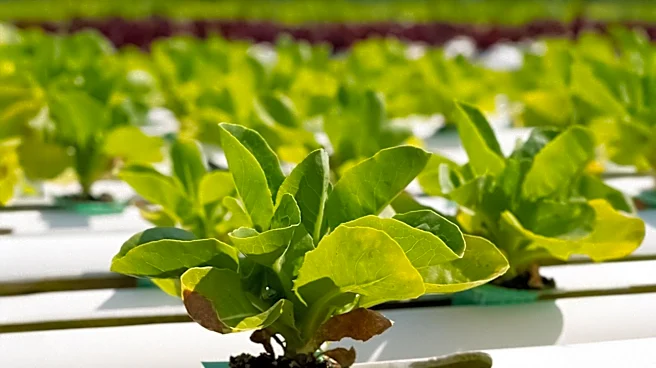
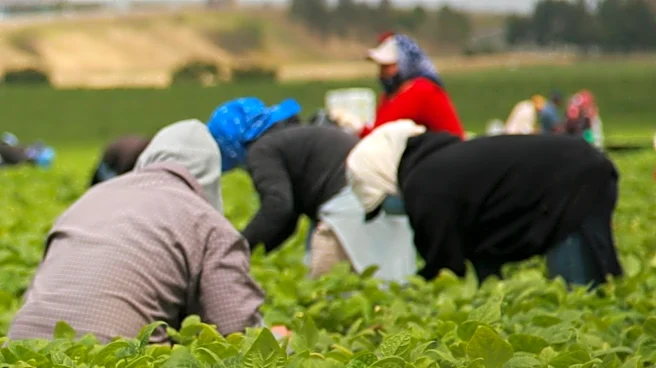
their harvest duties by midday and then spending the afternoon relaxing and eating outdoors, transforming a mandatory task into a social event. This phenomenon is particularly observed at 'sideline farms,' which are cultivated by workplaces to feed staff and generate additional income. These farms have proliferated in areas like Anju, leading to more workers being called upon for harvest. While the annual harvest mobilization typically focuses on collective farms, sideline farms are now drawing from the same labor pool, including office workers, students, and members of the Socialist Women’s Union of Korea. The success and resources of these sideline farms vary greatly, with some well-backed units managing them so effectively that they are said to outperform regular collective farms.
Why It's Important?
This disparity in harvest mobilization experiences underscores the growing economic inequalities within North Korea, despite the regime's emphasis on collective effort and food security. The ability of certain state-backed units to provide better working conditions and even 'picnic-like' experiences for their workers suggests a two-tiered system, where access to resources and management capabilities dictate the quality of life and work for citizens. This situation can lead to resentment and envy among those who endure harsher conditions, potentially undermining social cohesion and the state's narrative of shared prosperity. The reliance on sideline farms for income and food also indicates the limitations of the central state-controlled economy and the necessity for individual units to generate their own resources, further contributing to uneven development and opportunities across the country. The contrast between official media reports of bumper harvests and satellite imagery suggesting lagging progress in key grain-producing regions highlights a potential disconnect between state propaganda and the realities on the ground.
What's Next?
The observed disparities in harvest mobilization are likely to continue, potentially exacerbating social divisions and envy among the North Korean populace. As some workers enjoy more favorable conditions, those in less resourced units will continue to face arduous labor, which could lead to increased dissatisfaction. The regime may attempt to address these growing inequalities through propaganda emphasizing collective achievements or by implementing measures to standardize working conditions, though the effectiveness of such efforts remains uncertain given the underlying economic challenges. The continued reliance on sideline farms suggests that state entities will likely further develop these independent income-generating activities, potentially leading to more localized economic variations. Monitoring the regime's response to these internal disparities and the broader impact on food security will be crucial in understanding the evolving socio-economic landscape of North Korea.
Beyond the Headlines
The 'picnic-like' harvest mobilizations for some North Korean workers reveal a deeper, less obvious implication: the subtle erosion of the state's absolute control over daily life and labor. While the mobilization is still compulsory, the ability of certain units to transform it into a more pleasant experience suggests a degree of autonomy and resourcefulness that deviates from the rigid, centrally planned system. This informal adaptation, driven by the need for self-sufficiency and employee morale, could inadvertently foster a sense of localized agency and privilege that challenges the uniform ideological narrative. The envy expressed by those in less fortunate circumstances also points to a growing awareness of economic stratification, which could have long-term implications for social stability and the regime's legitimacy. This situation highlights the complex interplay between state directives, economic realities, and individual experiences in a highly controlled society, where even mandatory labor can become a symbol of inequality.