



What's Happening?
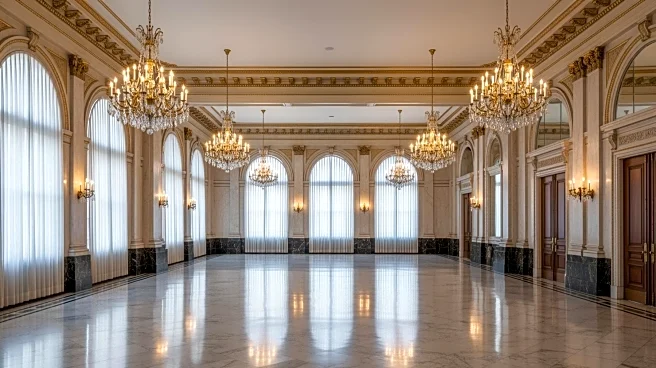
New renderings have been released detailing President Trump's proposed $400 million White House ballroom addition. The plans, submitted by the project's architects and released by the National Capital Planning Commission (NCPC), depict a sprawling 90,000
square foot structure. The ballroom project has been controversial since its inception, with President Trump beginning demolition of the East Wing to make space for the ballroom before construction plans were submitted to oversight bodies. This action led to public backlash and a federal lawsuit filed by the National Trust for Historic Preservation, arguing that the administration violated laws by demolishing parts of the White House without proper review. The ballroom is being financed by private donors and large corporations, and President Trump has stated that it will be used for future Presidential Inaugurations.
Why It's Important?
The proposed ballroom addition to the White House is significant as it highlights ongoing debates about historical preservation versus modernization. The project has drawn criticism from preservationists and legal challenges, reflecting broader tensions between maintaining historical integrity and pursuing new developments. The involvement of major corporations in financing the project also raises questions about the influence of private interests in public spaces. Additionally, the project underscores President Trump's approach to governance, prioritizing grand architectural projects that align with his vision, potentially setting precedents for future administrations.
What's Next?
The NCPC is scheduled to discuss the proposal in a hearing on March 5. The outcome of this hearing could determine the project's future, including whether it proceeds as planned or faces further legal and regulatory hurdles. Stakeholders such as preservationists, legal experts, and political figures are likely to continue voicing their opinions, potentially influencing public perception and policy decisions. The administration's plans to enhance visitor experiences and security measures at the White House may also be impacted by the project's progress and public response.
Beyond the Headlines
Beyond the immediate controversy, the ballroom project raises deeper questions about the role of the White House as a symbol of American heritage and its adaptability to contemporary needs. The balance between preserving historical elements and accommodating modern functions is a recurring theme in architectural and cultural discussions. The project's financing by private entities also touches on ethical considerations regarding the commercialization of national landmarks. Long-term, the ballroom could influence how future administrations approach renovations and expansions of historically significant sites.