


What's Happening?
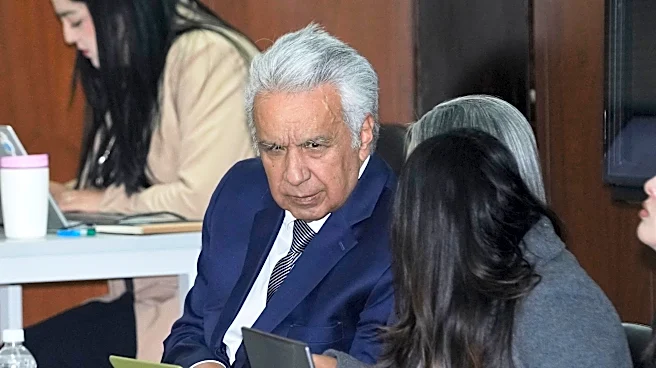
Former Ecuadorian President Lenín Moreno has been sentenced to five years in prison after being found guilty of accepting bribes from a Chinese company. The court determined that Moreno received illicit payments in exchange for assisting the company,
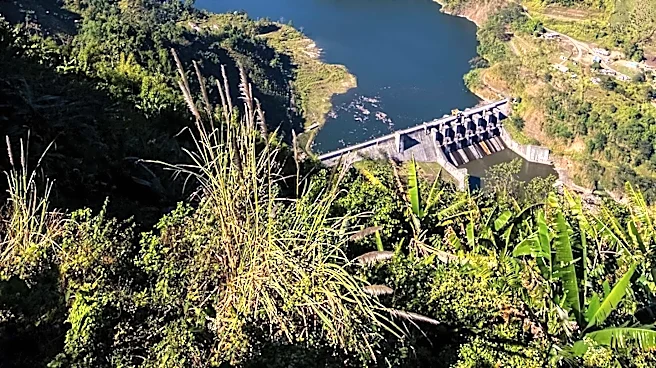
Sinohydro, in securing a contract to build a hydroelectric plant. The corruption network, which operated from 2008 to 2018, involved bribes amounting to 4% of the project's value, distributed to public officials and other beneficiaries, including Moreno. Moreno, who is 73 years old and has a physical disability, will serve his sentence under house arrest. His wife and daughter, along with two brothers and a brother-in-law, were also convicted as accomplices, receiving 30-month sentences and ordered to repay triple the illicit funds received within 90 days. Moreno was convicted as a direct participant in the bribery scheme during his tenure as vice president under Rafael Correa.
Why It's Important?
This sentencing marks a significant development in Ecuador's ongoing efforts to combat corruption at the highest levels of government. Moreno is the third former Ecuadorian president to be sentenced for corruption, highlighting a pattern of systemic issues within the nation's political landscape. The case underscores the vulnerabilities of large-scale infrastructure projects to corrupt practices, particularly when foreign companies are involved. The conviction of a former head of state, even for crimes committed before his presidency, sends a strong message about accountability and the rule of law. The involvement of family members in the scheme further illustrates the pervasive nature of the corruption network. The Coca Codo Sinclair hydroelectric plant, the subject of the bribery, has also faced criticism over structural defects, raising concerns about the quality and integrity of projects awarded through corrupt means.
What's Next?
Lenín Moreno will serve his five-year sentence under house arrest due to his age and physical disability. His wife and daughter, along with other convicted accomplices, will serve their 30-month sentences and are mandated to repay triple the illicit funds within 90 days. This case may encourage further investigations into past and present government contracts, especially those involving large foreign investments. The ongoing legal proceedings against other former presidents, such as Abdalá Bucaram, suggest a continued focus on prosecuting high-level corruption in Ecuador. The outcome of this case could also influence future electoral campaigns, with public sentiment likely favoring candidates who prioritize anti-corruption measures and transparency in government dealings.
Beyond the Headlines
The conviction of a former president for corruption has broader implications for public trust in governmental institutions and the democratic process in Ecuador. It highlights the ethical challenges associated with political power and the potential for personal gain to supersede public service. The case also brings to light the complexities of international business dealings, particularly the ethical responsibilities of foreign companies operating in developing nations. The structural defects reported in the Coca Codo Sinclair hydroelectric plant, a project tainted by bribery, raise questions about the long-term consequences of corruption on national infrastructure and public safety. This situation could prompt a re-evaluation of oversight mechanisms and procurement processes for major public works to prevent similar abuses in the future.