


What's Happening?
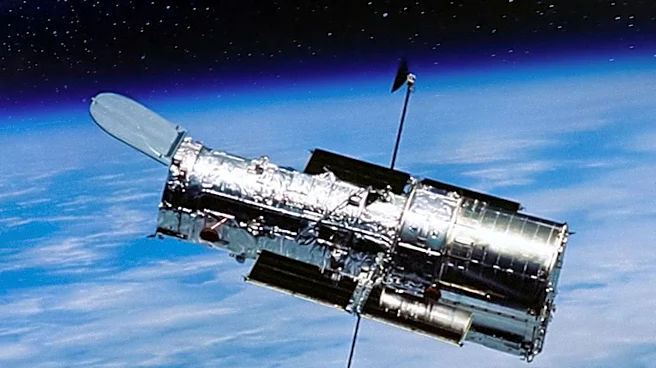
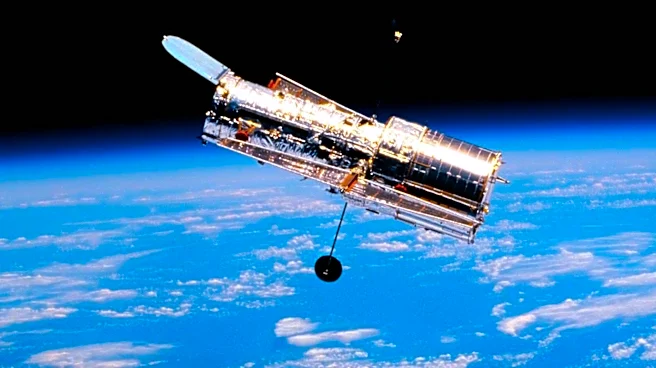
The Hubble Space Telescope's orbit is steadily decaying due to atmospheric drag, raising concerns about an uncontrolled reentry into Earth's atmosphere. Unlike many modern spacecraft, Hubble was not designed with station-keeping thrusters or the ability
to steer itself for a controlled deorbit. The drag on the telescope, which is roughly the size of a school bus, is influenced by solar activity; increased solar extreme ultraviolet and 10.7 cm radio flux cause the thermosphere to swell, increasing density at Hubble's altitude and accelerating its descent. While the telescope has undergone reboosts in the past by Space Shuttles, the last such mission was in 2002. NASA has not approved further reboosts, despite proposals such as one involving a Crew Dragon. The current rate of decay suggests an uncontrolled reentry could occur within the next decade if no action is taken. The website 'Hubble Reentry Tracker' monitors the telescope's altitude daily, providing real-time data on its orbital decay.
Why It's Important?
The potential uncontrolled reentry of the Hubble Space Telescope poses significant risks and implications. Without a controlled deorbit, surviving hardware from the telescope could reach the Earth's surface, creating a hazard for populated areas. This situation highlights a critical design oversight from an era when space debris and controlled deorbiting were less emphasized. The cost and complexity of a mission to reboost or deorbit Hubble are substantial, involving either a visiting vehicle capable of docking and firing thrusters or a dedicated disposal craft. The decision not to approve further reboosts, despite the known decay, reflects a complex interplay of budgetary constraints, technological challenges, and evolving priorities in space exploration. The loss of Hubble, even through an uncontrolled reentry, would mark the end of an iconic scientific instrument that has revolutionized astronomy and public understanding of the universe for decades.
What's Next?
The immediate future for the Hubble Space Telescope involves continued monitoring of its orbital decay. Without an approved reboost mission, the telescope's altitude will continue to decrease, increasing the likelihood of an uncontrolled reentry. The exact date and footprint of such an event are difficult to predict, as they depend on atmospheric models, solar forecasts, and the ultimate decision on whether any intervention will occur. Stakeholders, including NASA and the broader scientific community, will likely continue to debate the feasibility and necessity of a controlled deorbit mission. The ongoing decay serves as a stark reminder of the finite operational lifespan of even the most robust space assets and the challenges associated with managing end-of-life scenarios for large orbital structures. The data from the 'Hubble Reentry Tracker' will remain a key resource for observing the telescope's descent.
Beyond the Headlines
The situation with the Hubble Space Telescope's impending uncontrolled reentry underscores broader ethical and policy considerations in space exploration. The initial design of Hubble, lacking deorbit capabilities, reflects a historical context where the long-term environmental impact of space objects was less understood or prioritized. This event could serve as a catalyst for stricter international regulations and design requirements for future spacecraft, mandating controlled deorbiting mechanisms or design for atmospheric demise. Furthermore, it highlights the tension between preserving invaluable scientific assets and managing the growing problem of space debris. The public's emotional connection to Hubble, a symbol of human ingenuity and discovery, adds a cultural dimension to the debate, as its uncontrolled fall would represent a poignant end to a scientific marvel. The incident could also spur innovation in space robotics and servicing missions, as the need for on-orbit repair, refueling, and deorbiting capabilities becomes increasingly apparent for sustainable space operations.