



What's Happening?
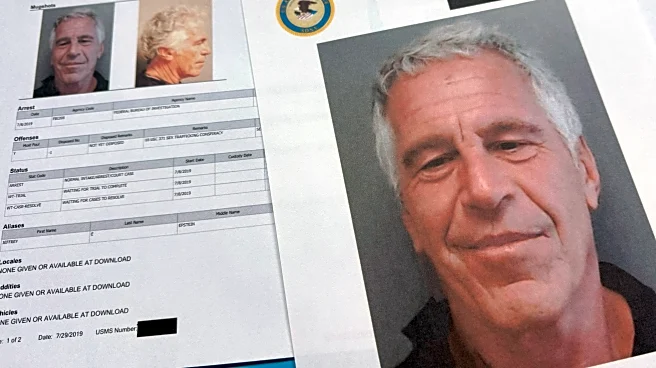
The Department of Justice (DOJ) has released a series of photos as part of a federal mandate to disclose documents related to Jeffrey Epstein. Among these photos is an image showing former President Bill Clinton, Rolling Stones frontman Mick Jagger, and Epstein's
associate Ghislaine Maxwell at a dinner. The release is part of a broader effort to make public all unclassified documents related to Epstein, following a bipartisan law passed by Congress. The DOJ has cautioned that the presence of individuals in these photos does not imply any criminal wrongdoing. The photos lack specific context such as dates and locations, and many sections of the documents remain heavily redacted to protect victims. The release includes FBI files, court records, and photographs, with more material expected to be disclosed in the coming weeks.
Why It's Important?
The release of these photos is significant as it continues to shed light on the extensive network of individuals associated with Jeffrey Epstein, a convicted sex offender who died in jail in 2019. The involvement of high-profile figures like Bill Clinton and Mick Jagger in these images could lead to public scrutiny and speculation, despite the DOJ's warnings against jumping to conclusions. This disclosure is part of a larger transparency effort mandated by Congress, reflecting ongoing public and governmental interest in understanding the full scope of Epstein's activities and connections. The release could impact public perceptions of those involved and may influence ongoing investigations or legal proceedings related to Epstein's network.
What's Next?
As more documents and photos are expected to be released, there may be increased media attention and public interest in the individuals featured in these materials. Lawmakers and the public may call for further investigations or hearings to explore the extent of Epstein's connections and activities. The DOJ will likely continue to review and release additional documents, balancing transparency with the need to protect victims' identities. The ongoing disclosure process may also prompt legal and ethical discussions about privacy, accountability, and the responsibilities of public figures.