
What's Happening?
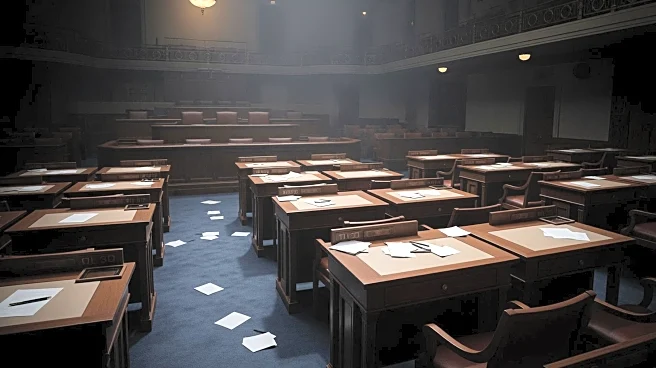
Former U.S. lawmakers are expressing concern over the current state of Congress, describing it as increasingly dysfunctional and plagued by low morale. According to a report, a record number of lawmakers are leaving
their positions, citing legislative stagnation, death threats, and a lack of productivity. Former Rep. Jim Cooper likened Congress to being 'in a coma,' highlighting its diminished effectiveness. The centralization of power in party leadership has reportedly reduced the influence of committee roles, further contributing to the legislative gridlock. Additionally, the congressional calendar, which allows for limited working days, is seen as a barrier to building consensus and achieving legislative goals. Former members also noted the rise in threats against lawmakers, which has led to increased security measures and a shift in the mindset regarding accessibility and safety.
Why It's Important?
The issues highlighted by former lawmakers have significant implications for the functioning of the U.S. government. The perceived dysfunction and low morale within Congress could hinder its ability to effectively legislate and address critical national issues. The centralization of power in leadership and the erosion of committee influence may lead to a lack of diverse perspectives in policymaking. Furthermore, the rise in threats against lawmakers poses a serious risk to their safety and could deter qualified individuals from seeking office. This environment may contribute to increased partisanship and a further decline in public trust in government institutions. The challenges faced by Congress could impact its ability to fulfill its constitutional role and address the needs of the American people.
What's Next?
As Congress continues to grapple with these challenges, there may be calls for reforms to improve its functionality and address the concerns raised by former lawmakers. Potential steps could include revising the congressional calendar to allow for more working days, enhancing security measures for lawmakers, and exploring ways to decentralize power from party leadership to committees. Additionally, there may be discussions on how to attract and retain qualified individuals in Congress, possibly through adjustments to compensation and support for work-life balance. The ongoing issues within Congress may also prompt increased public scrutiny and pressure for accountability and change.
Beyond the Headlines
The current state of Congress raises broader questions about the health of American democracy and the balance of power between branches of government. The shift of power from Congress to the executive branch, as noted by former lawmakers, could have long-term implications for the separation of powers and the ability of Congress to check executive actions. The increasing partisanship and polarization within Congress may also reflect broader societal divisions, highlighting the need for efforts to foster bipartisanship and collaboration. Addressing these challenges will require a concerted effort from lawmakers, political leaders, and the public to ensure that Congress can effectively serve its role in the democratic process.