





What's Happening?
A new study by Monash University researchers, published in Science Advances, emphasizes the urgent need for coordinated global action to combat mosquito-borne diseases. Lead researcher Dr. Toby Cumming, a research fellow in the Health and Climate Initiative
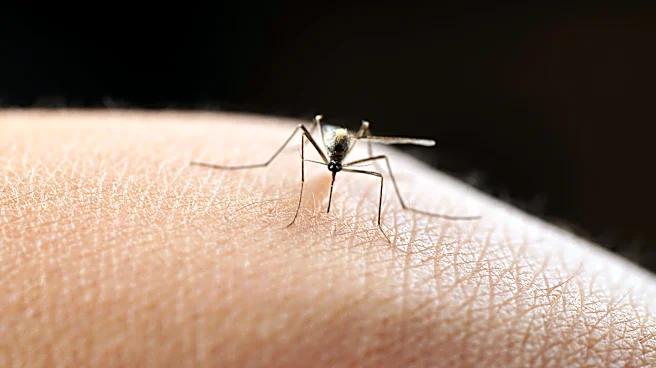
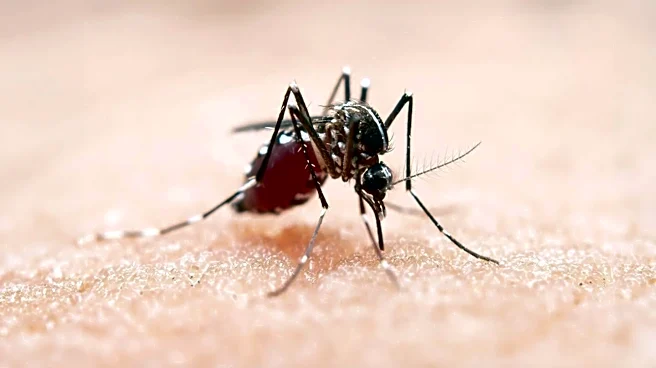
at the Monash School of Public Health and Preventive Medicine, highlights that climate change, with its increasing temperatures and altered rainfall patterns, is expanding the geographical areas where Anopheles and Aedes mosquito populations can thrive. The study reviews the complex ecological, epidemiological, and socioeconomic factors influencing the transmission of malaria and dengue. While malaria has seen a long-term decline, its global incidence has risen by 8.5% over the past decade. Dengue infections are rapidly growing, with nearly 400 million cases annually worldwide, and no therapeutics are currently available for it. The research stresses that despite advancements in mosquito control and drug therapies for malaria, complacency is not an option.
Why It's Important?
This study is critically important as it underscores the escalating threat of mosquito-borne diseases, particularly dengue and malaria, in the context of a changing global climate. The expansion of mosquito habitats due to rising temperatures and altered rainfall patterns directly impacts public health worldwide, including the U.S., where warmer climates are already seeing increased mosquito activity and disease outbreaks. The lack of therapeutics for dengue and the rising global incidence of malaria present significant challenges to healthcare systems and economies. The call for a coordinated approach involving vector control, vaccine deployment, and greenhouse gas emission reduction highlights the interconnectedness of environmental health and human well-being. This research could influence international public health policies and funding allocations, pushing for more integrated strategies to address these growing threats and protect vulnerable populations.
What's Next?
The Monash University study advocates for a multi-faceted approach to address mosquito-borne diseases. This includes continued and enhanced vector control interventions, such as the innovative use of Wolbachia bacteria in Aedes mosquito populations to reduce dengue transmission. The development and deployment of novel preventive interventions, including vaccines for dengue, are also crucial next steps. Furthermore, the study implicitly calls for global policy changes to mitigate climate change by reducing greenhouse gas emissions, recognizing its role in expanding mosquito habitats. Researchers and public health officials will likely focus on better understanding the drivers of disease transmission to identify more effective public health responses. The emphasis on a coordinated global effort suggests that international collaborations and resource sharing will be vital in tackling these complex health challenges.
Beyond the Headlines
Beyond the immediate health implications, the study's findings point to deeper societal and ethical considerations. The disproportionate impact of mosquito-borne diseases on vulnerable populations, often in regions with limited healthcare infrastructure, raises questions of global health equity. The expansion of these diseases into new geographic areas, including parts of the U.S., could lead to increased healthcare burdens and economic strain. The research also highlights the ethical imperative to address climate change, as its effects directly contribute to the spread of these diseases. This situation may necessitate a re-evaluation of international aid, research priorities, and public health education campaigns to foster greater awareness and preparedness. The long-term shifts could include a greater integration of climate science into public health planning and a more holistic approach to global health security.