



What's Happening?
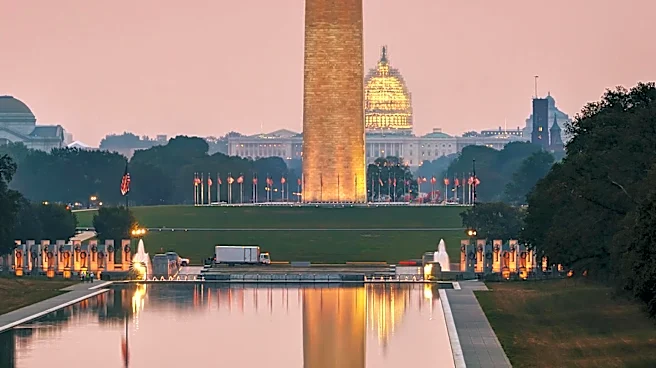
Senator Jim Justice (R-W.Va.) successfully navigated the polarized U.S. Senate to pass his first bill, the Williams National Medal of Honor Monument Location Act, which directs the placement of a monument honoring late World War II Medal of Honor recipient
Hershel 'Woody' Williams on the National Mall. The legislation, which passed the Senate unanimously in March and the House on August 31, is now awaiting President Trump's signature. Senator Justice expressed his frustration with the current state of political polarization, describing it as 'romper-room behavior' and lamenting the lack of dialogue and respect among senators. He detailed how the bill initially faced resistance due to partisan dynamics but ultimately gained unanimous support after a direct conversation with Senator Martin Heinrich (D-N.M.). The monument will honor Williams, a West Virginia native and the last surviving World War II Medal of Honor recipient before his death in 2022, while also commemorating all Medal of Honor recipients.
Why It's Important?
The passage of this bill is significant not only for honoring a national hero but also as a rare instance of bipartisan cooperation in a deeply divided Senate. Senator Justice's account highlights the profound challenges of legislative progress in the current political climate, where even non-controversial measures can become entangled in partisan gridlock. The successful passage of the Williams National Medal of Honor Monument Location Act demonstrates that personal relationships and direct communication can still bridge political divides, offering a potential model for overcoming legislative stalemates. The monument itself will serve as a lasting tribute to the extraordinary bravery and sacrifice of Medal of Honor recipients, reinforcing national values and providing a tangible connection to U.S. military history. This act also underscores the importance of recognizing and preserving the legacies of those who have served the nation, particularly as the generation of World War II veterans diminishes.
What's Next?
The legislation is currently awaiting President Trump's signature, which Senator Justice anticipates will occur in the coming week. Once signed, the process of establishing the Williams National Medal of Honor Monument on the National Mall will begin. This will involve site selection, design, fundraising, and construction, likely overseen by relevant federal agencies and a dedicated monument commission. The successful passage of this bill could also encourage other lawmakers to seek similar bipartisan approaches for legislative initiatives, particularly those with broad public appeal or historical significance. Senator Justice's call for more dialogue and less 'childishness' in the Senate suggests a continued effort to foster a more collaborative legislative environment, though he acknowledges the systemic challenges, such as the filibuster and the focus on re-election, that contribute to the current polarization. The monument's eventual unveiling will be a national event, drawing attention to the sacrifices of military personnel and potentially inspiring future generations.
Beyond the Headlines
The story of Senator Justice's bill transcends the immediate legislative outcome, offering a poignant commentary on the state of U.S. politics and the enduring power of shared national values. The 'romper-room behavior' described by Justice reflects a broader societal concern about political dysfunction and its impact on governance. The breakthrough achieved through a personal conversation with Senator Heinrich underscores the human element often lost in the highly formalized and adversarial environment of Washington D.C. This event suggests that while ideological divides are deep, opportunities for consensus can still emerge when individuals prioritize common ground and mutual respect. The monument itself will not only honor military heroism but also serve as a symbol of national unity and remembrance, potentially fostering a sense of collective identity in a fragmented society. The narrative also subtly critiques the professional political class, with Justice's former chief of staff suggesting that some lawmakers prioritize re-election over legislative achievement, a dynamic that contributes to the persistent gridlock and public disillusionment with government.