

What's Happening?
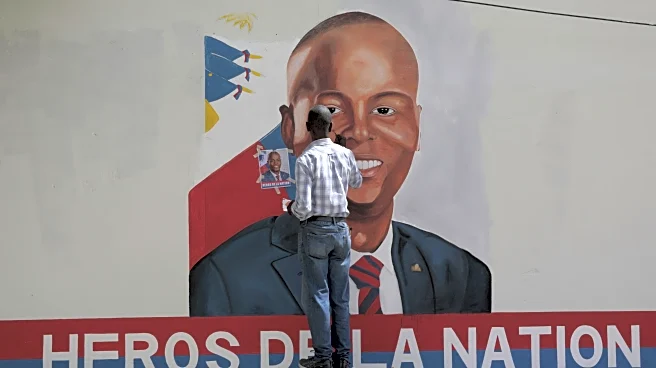
Jury selection is set to commence in Miami for the U.S. federal trial of four men accused of orchestrating the assassination of Haitian President Jovenel Moïse in 2021. The defendants, Arcangel Pretel Ortiz, Antonio Intriago, Walter Veintemilla, and James
Solages, face charges of conspiracy to kidnap or kill Moïse, along with related offenses. They have pleaded not guilty and could face life sentences if convicted. The assassination occurred on July 7, 2021, when mercenaries attacked Moïse's residence near Port-au-Prince, resulting in his death and injuries to his wife, Martine Moïse. The plot was allegedly planned and financed in South Florida, with Ortiz and Intriago leading the Counter Terrorist Unit Federal Academy and Security, and Veintemilla heading Worldwide Capital Lending Group. The trial was delayed due to discovery challenges and the volume of evidence.
Why It's Important?
The trial is significant as it addresses the international implications of political violence and the role of U.S.-based entities in foreign political conspiracies. The assassination destabilized Haiti, exacerbating political turmoil and insecurity. The involvement of South Florida businesses highlights concerns about the use of U.S. soil for planning international crimes. The outcome of the trial could influence U.S.-Haiti relations and set precedents for handling similar cases involving foreign political figures. It also underscores the challenges in prosecuting complex international conspiracies, with implications for U.S. legal and diplomatic practices.
What's Next?
The trial is expected to reveal detailed insights into the planning and execution of the assassination, potentially implicating additional individuals and organizations. The proceedings may lead to further legal actions against other conspirators, both in the U.S. and Haiti. The case could prompt legislative or policy changes regarding the monitoring of foreign political activities within the U.S. The trial's progress will be closely watched by international observers, given its potential impact on Haiti's political landscape and U.S. foreign policy.
Beyond the Headlines
The trial raises ethical questions about the accountability of private security firms and financial institutions in international political plots. It highlights the need for stricter regulations and oversight of entities involved in foreign affairs. The case also reflects broader issues of political instability in Haiti and the influence of external actors in its governance. Long-term, the trial could contribute to discussions on international law enforcement cooperation and the prevention of political violence.