




What's Happening?
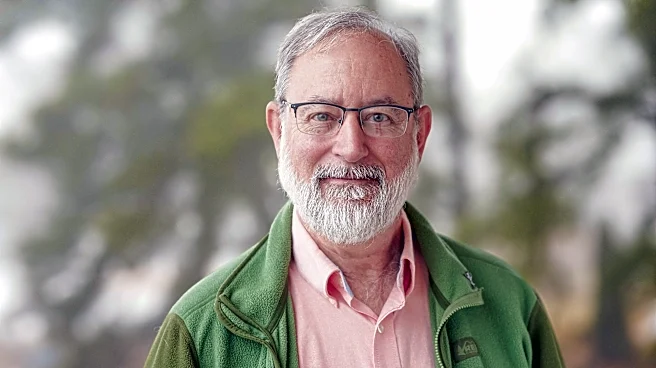
U.S. Representative Jeff Hurd, representing Colorado's 3rd Congressional District, recently hosted a field tour for several of his Congressional Western Caucus colleagues in Southwest Colorado. The purpose of this tour was to provide a firsthand understanding
of the unique challenges and issues facing Western Colorado, which Hurd believes cannot be fully grasped from Washington D.C. alone. During the two-day tour, the delegation observed wildfire damage from the air, visited Mesa Verde National Park, explored an aerospace company in Durango, and engaged with members of the Southern Ute and Ute Mountain Ute communities. Hurd emphasized that such direct experiences are crucial for federal partners to make informed decisions regarding forest management, wildfire mitigation, watershed health, disaster recovery, federal assistance, public lands stewardship, and Tribal sovereignty.
Why It's Important?
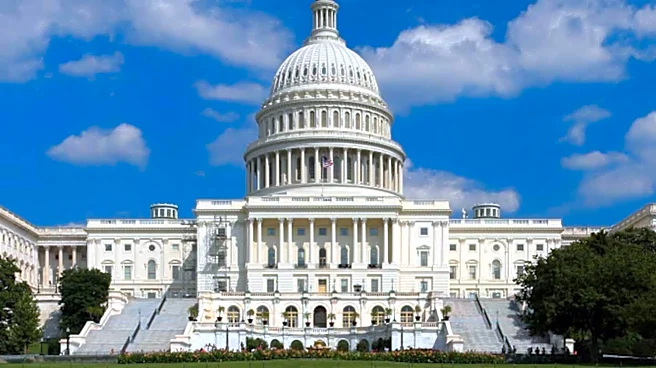
This initiative is significant because it underscores the importance of experiential learning and direct engagement in policymaking, particularly for issues that are geographically specific and complex. By bringing federal lawmakers to Western Colorado, Representative Hurd aims to bridge the gap between Washington D.C. policy discussions and the on-the-ground realities faced by his constituents. This approach can lead to more effective and tailored federal policies that address the specific needs of rural and Western communities, rather than relying solely on abstract reports or briefings. It also highlights the value of intergovernmental collaboration and understanding, as federal decisions often have direct impacts on local economies, environments, and communities, including Tribal nations. The tour's focus on diverse issues, from wildfire recovery to economic development and Tribal sovereignty, demonstrates a comprehensive effort to inform federal decision-makers about the interconnectedness of these challenges in the region.
What's Next?
The insights gained by the Congressional Western Caucus members during this field tour are expected to inform their future legislative work and policy decisions related to Western states. This direct exposure could lead to increased federal support for wildfire prevention and recovery efforts, more nuanced approaches to public land management, and policies that better respect Tribal sovereignty and promote economic development in the region. Representative Hurd will likely leverage the shared experiences from this tour to advocate for specific legislative initiatives or funding allocations that benefit Colorado's 3rd Congressional District. The success of this model may also encourage other lawmakers to conduct similar field tours, fostering a more informed and responsive federal government that is better connected to the diverse realities of American communities.
Beyond the Headlines
Beyond the immediate policy implications, this initiative touches upon a broader philosophical debate about the nature of representation and governance. In an increasingly complex and diverse nation, the challenge for lawmakers is to truly understand the varied experiences of their constituents. Field tours like this serve as a powerful reminder that effective governance often requires moving beyond the confines of legislative chambers and engaging directly with the people and places affected by policy. This approach can foster greater empathy, build stronger relationships between federal and local stakeholders, and ultimately lead to more legitimate and sustainable policy outcomes. It also highlights the ongoing tension between centralized policymaking in Washington D.C. and the need for localized, context-specific solutions, particularly in regions with unique environmental, economic, and cultural characteristics.