






What's Happening?
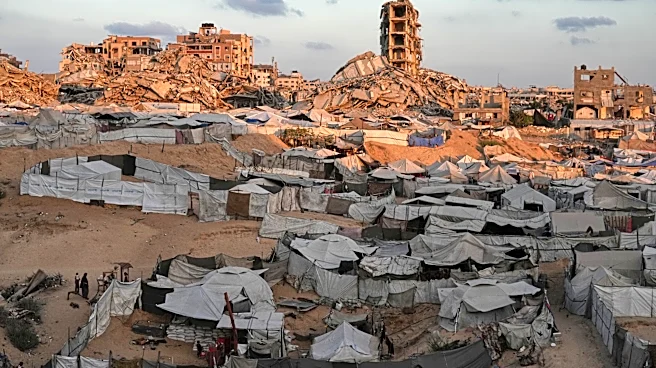
Amed Khan, a New York financier, has been actively involved in providing humanitarian aid to Gaza and facilitating the evacuation of families, including the relatives of Hind Rajab, a Palestinian child whose recorded phone call gained global attention.
Khan, through his foundation, directly delivers aid such as food, medicine, and emergency child nutrition. His efforts include coordinating the evacuation of Hind Rajab's family, who are now residing in Greece. Khan's work in Gaza began well before the recent escalation, and he has been critical of the obstacles to aid delivery, citing issues like the suspension of funding to UNRWA and Israeli restrictions on essential supplies. He has also publicly expressed his disillusionment with U.S. policy regarding Gaza, having previously supported President Biden's campaign.
Why It's Important?
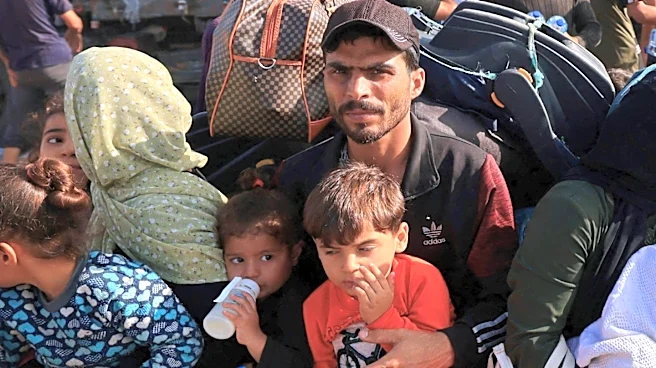
Khan's direct involvement highlights the critical gaps in international humanitarian response and the challenges faced by aid organizations in conflict zones. His personal funding and hands-on approach underscore the limitations of traditional aid channels and the urgent need for more effective mechanisms to deliver assistance. The story of Hind Rajab's family, and Khan's role in their evacuation, brings a human face to the broader humanitarian crisis in Gaza, emphasizing the severe impact on civilians, particularly children. His public criticism of U.S. policy, despite his past political support, reflects a growing sentiment among some Americans regarding the administration's stance on the conflict and the perceived inadequacy of its humanitarian efforts. This could influence public opinion and potentially pressure policymakers to re-evaluate their approach to aid and diplomatic engagement in the region.
What's Next?
Amed Khan continues to advocate for increased and unimpeded humanitarian aid to Gaza, emphasizing the disparity between international pledges and actual deliveries. His ongoing efforts will likely focus on direct aid provision and the evacuation of vulnerable individuals, particularly children requiring medical attention. Given his public stance and past political involvement, Khan may continue to use his platform to challenge U.S. foreign policy and call for greater accountability from international bodies and governments regarding the humanitarian situation in Gaza. The success of his direct aid model could also inspire other private philanthropists to adopt similar approaches, potentially leading to new avenues for humanitarian assistance in complex emergencies.
Beyond the Headlines
The narrative surrounding Amed Khan's work extends beyond immediate aid delivery to touch upon deeper ethical and political dimensions. His experience exposes the bureaucratic and political hurdles that often impede humanitarian efforts, raising questions about the effectiveness and impartiality of international aid frameworks. The scrutiny he applies to the 'gap' between announced aid and actual delivery highlights a systemic issue in global humanitarian response. Furthermore, Khan's personal journey from a political supporter to a vocal critic of U.S. policy on Gaza reflects a broader moral reckoning among some American citizens regarding their government's role in international conflicts. This could contribute to a shift in public discourse and potentially influence future foreign policy debates, emphasizing the ethical responsibilities of powerful nations in humanitarian crises.