




What's Happening?
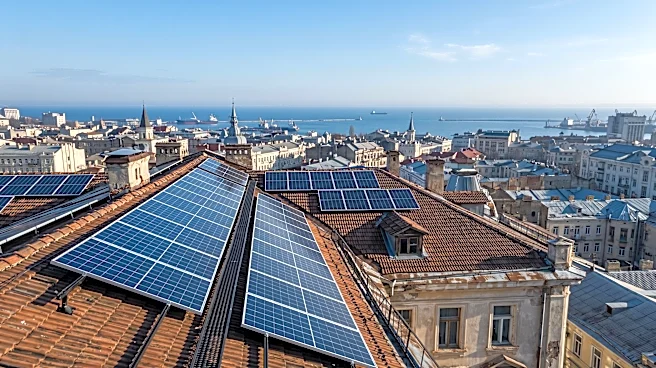
The International Renewable Energy Agency (IRENA) has advised Georgia to establish a clearer, integrated pathway for its renewable energy transition. While Georgia possesses significant renewable resources and a power system largely dependent on hydropower,
IRENA's analysis indicates inconsistencies across the country's key planning documents, including its Nationally Determined Contribution (NDC), National Energy and Climate Plan (NECP), and Long-Term Low-Emission Development Strategy (LT-LEDS). These documents present differing emissions trajectories, baselines, and renewable capacity projections, particularly regarding the future roles of solar, wind, and hydropower. IRENA emphasizes that for renewable energy targets to attract investment, developers need a credible path from project concept to grid connection, revenue certainty, and construction. The agency's priorities for Georgia by 2030 include consolidating national energy and climate planning, accelerating diversified renewable deployment through transparent procurement, upgrading transmission and flexibility resources, strengthening project bankability, and building institutional capacity and local skills.
Why It's Important?
The lack of a unified and clear strategy in Georgia's renewable energy transition could deter international investors and hinder the country's ability to diversify its energy mix. Inconsistencies in planning documents create uncertainty for developers, lenders, and grid operators, making it difficult to commit to large-scale projects. A robust and transparent framework is crucial for attracting the necessary capital and expertise to expand solar and wind capacity, which would reduce Georgia's reliance on hydropower and enhance energy security. Without a coherent plan, Georgia risks inefficient resource allocation, potential grid instability due to increased variable renewable energy sources, and slower progress toward its climate goals. The ability to present a consistent investment signal is vital for Georgia to leverage its renewable potential and integrate more sustainable energy into its national grid.
What's Next?
To address IRENA's recommendations, Georgia will likely need to undertake a comprehensive review and harmonization of its national energy and climate planning documents. This process would involve aligning the NDC, NECP, and LT-LEDS to provide a consistent vision for future electricity demand, renewable capacity, grid investment, and flexibility. The government may also need to implement more transparent procurement processes and market arrangements to enhance project bankability. Furthermore, significant investment in grid upgrades, operational improvements, and proven flexibility solutions, such as battery storage, will be critical for the immediate integration of more wind and solar power. Building institutional capacity and local skills will also be essential to translate these plans into tangible projects and ensure a smooth transition.
Beyond the Headlines
The challenges faced by Georgia in harmonizing its renewable energy strategies highlight a broader issue common in many developing nations transitioning to cleaner energy. The complexity of integrating various renewable sources, upgrading aging infrastructure, and attracting foreign investment often requires a delicate balance between ambitious targets and practical implementation. This situation also underscores the critical role of international bodies like IRENA in providing guidance and technical support to countries navigating these transitions. The success of Georgia's efforts could serve as a model for other nations with similar energy profiles, demonstrating how strategic planning and policy coherence can unlock significant renewable energy potential and contribute to global decarbonization efforts.