









What's Happening?
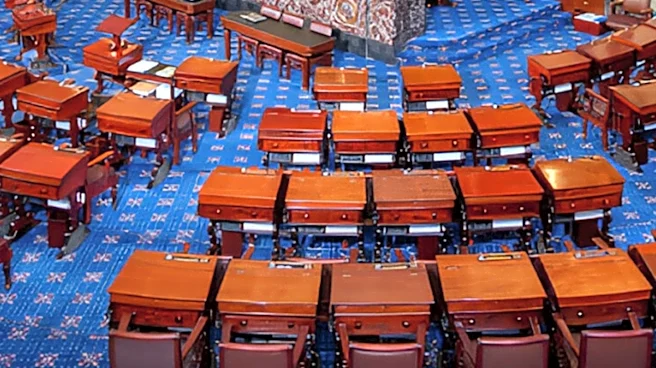
The U.S. Senate Environment and Public Works Committee has unanimously approved the Water Resources Development Act (WRDA) of 2026. This bipartisan legislation, introduced by Senators Shelley Moore Capito, Sheldon Whitehouse, Kevin Cramer, Angela Alsobrooks,
and Adam Schiff, authorizes 61 feasibility studies and 15 new or modified U.S. Army Corps of Engineers construction projects. These projects focus on flood risk management, navigation, and ecosystem restoration. Additionally, the bill reauthorizes the Environmental Protection Agency’s drinking water and wastewater infrastructure programs, including the State Revolving Funds, and includes provisions to strengthen cybersecurity for critical water systems. The bill aims to enhance water resources infrastructure and increase access to clean and safe drinking water nationwide.
Why It's Important?
The WRDA 2026 is significant as it addresses critical infrastructure needs in the U.S., particularly in water management and cybersecurity. By authorizing new projects and reauthorizing existing programs, the legislation aims to improve flood risk management and ecosystem restoration, which are vital for environmental sustainability and public safety. The inclusion of cybersecurity measures is crucial in protecting water systems from potential cyber threats, ensuring the safety and reliability of water resources. This legislation could lead to increased federal investment in infrastructure, benefiting states by providing necessary funding and support for local projects.
What's Next?
Following the committee's approval, the WRDA 2026 will proceed to the full Senate for consideration. If passed, it will require implementation at the state and local levels, involving coordination with the U.S. Army Corps of Engineers and the Environmental Protection Agency. Stakeholders, including state governments and local communities, will need to prepare for the execution of authorized projects and the integration of cybersecurity measures. The bill's progress will be closely monitored by environmental and infrastructure advocacy groups, who may influence its final provisions and implementation strategies.