
What's Happening?
The Pentagon has released a new assessment highlighting the growing threat posed by China's military expansion. The report details China's efforts to accelerate the growth of its nuclear arsenal and aircraft
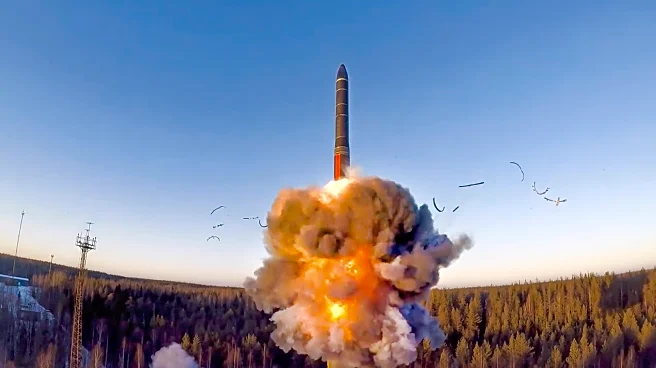
carrier fleet, with projections indicating that China will add six aircraft carriers by 2035, bringing its total to nine. This expansion is part of President Xi Jinping's vision to build a 'world-class' military capable of challenging U.S. global dominance by 2049. The report also notes that China's nuclear warhead stockpile, which was in the low 600s at the end of 2024, is expected to surpass 1,000 by 2030. Additionally, China has advanced its early-warning counterstrike capabilities, allowing for retaliatory strikes before an incoming warhead can detonate. The Pentagon's report also highlights China's increased defense budget and its strategic partnership with Russia, driven by a shared interest in countering the United States.
Why It's Important?
The Pentagon's assessment underscores the strategic challenges the U.S. faces as China continues to expand its military capabilities. The potential increase in China's nuclear arsenal and its growing naval power could shift the balance of power in the Asia-Pacific region, impacting U.S. military strategy and alliances. The report's findings may influence U.S. defense policy and budget allocations, as well as diplomatic relations with China. The deepening partnership between China and Russia, despite mutual distrust, presents an additional layer of complexity for U.S. foreign policy. The report also highlights the importance of maintaining open lines of communication between the U.S. and China to manage tensions and avoid potential conflicts.
What's Next?
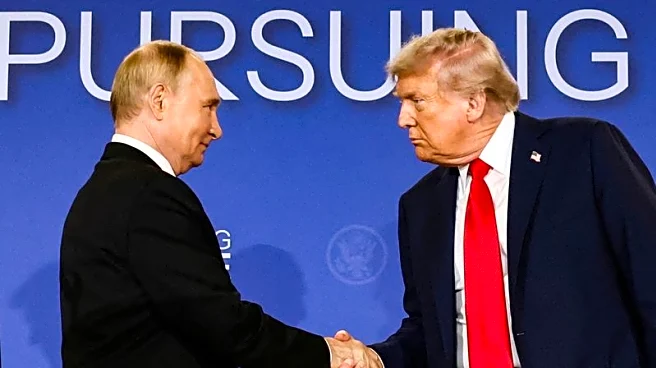
The report comes amid signs of renewed diplomatic engagement between the U.S. and China. President Trump has accepted an invitation from President Xi to visit China in April and has invited Xi for a state visit to the U.S. next year. These diplomatic efforts may provide a platform for addressing mutual concerns and finding common ground on security issues. However, the ongoing military buildup and strategic maneuvers by China will likely remain a focal point in U.S.-China relations, requiring careful navigation to prevent escalation and maintain regional stability.