
What's Happening?
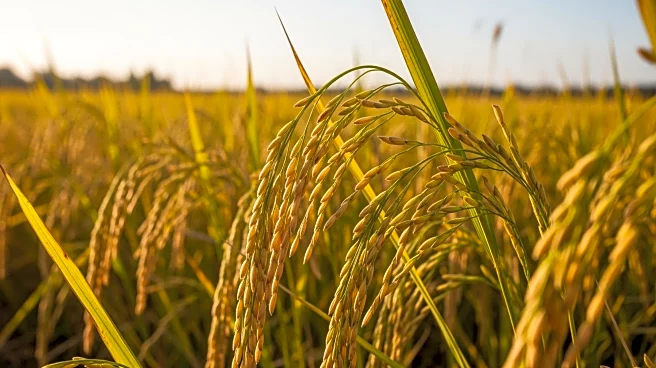
India has overtaken China to become the largest rice producer globally, with a production of 150.18 million tonnes, according to Union Agriculture Minister Shivraj Singh Chouhan. China's rice production was
reported at 145.28 million tonnes. This achievement is attributed to India's success in developing high-yielding seeds, making it a leading exporter of rice to international markets. The minister announced the release of 184 improved varieties of 25 field crops, developed by the Indian Council of Agricultural Research (ICAR), which includes cereals, pulses, oilseeds, fodder crops, sugarcane, cotton, jute, and tobacco. These new varieties are designed to address agricultural challenges such as climate change, soil salinity, and drought, while supporting organic farming practices.
Why It's Important?
India's emergence as the largest rice producer marks a significant milestone in its agricultural sector, reflecting advancements in seed technology and crop management. This development enhances India's position in global agricultural markets, potentially increasing its export revenues and strengthening its economy. The introduction of new crop varieties aims to improve yields and quality, benefiting farmers and contributing to food security. The focus on climate-resilient seeds addresses environmental challenges, promoting sustainable agricultural practices. This achievement underscores India's transition from a food-deficient nation to a major supplier of agricultural products worldwide.
What's Next?
The Indian government plans to ensure the rapid distribution of these new crop varieties to farmers, aiming to boost agricultural productivity and self-sufficiency. The Agriculture Minister has urged farm scientists to prioritize increasing the production of pulses and oilseeds. Continued efforts in developing high-yielding and climate-resilient seeds are expected to drive further growth in the agricultural sector. Stakeholders, including state and central agricultural universities and private seed companies, are likely to play a crucial role in advancing these initiatives.
Beyond the Headlines
The development of high-yielding and climate-resilient seeds represents a strategic shift towards sustainable agriculture, addressing both economic and environmental challenges. This approach not only supports India's food security but also contributes to global efforts in combating climate change. The focus on organic farming practices aligns with growing consumer demand for environmentally friendly products, potentially opening new markets for Indian agricultural exports. The collaboration between government agencies, research institutions, and private companies highlights the importance of public-private partnerships in driving innovation in the agricultural sector.