


What's Happening?
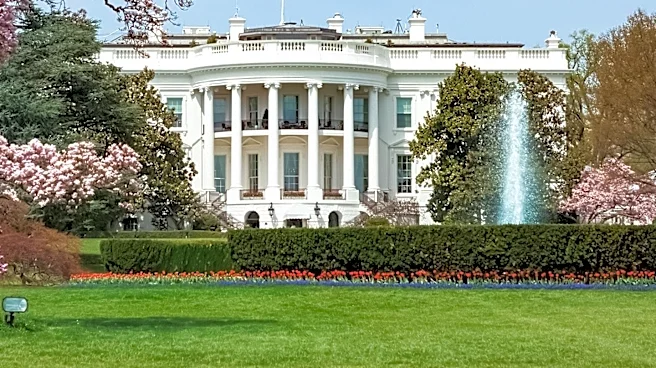
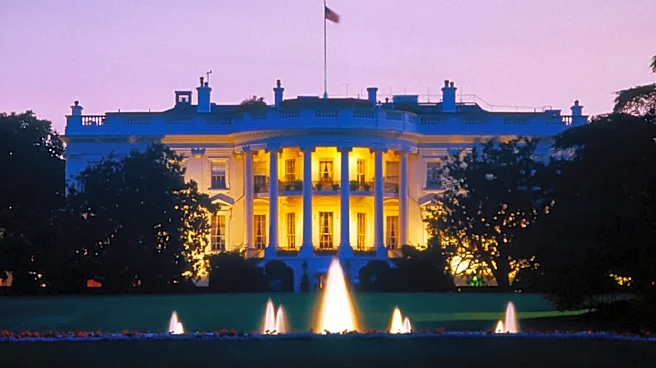
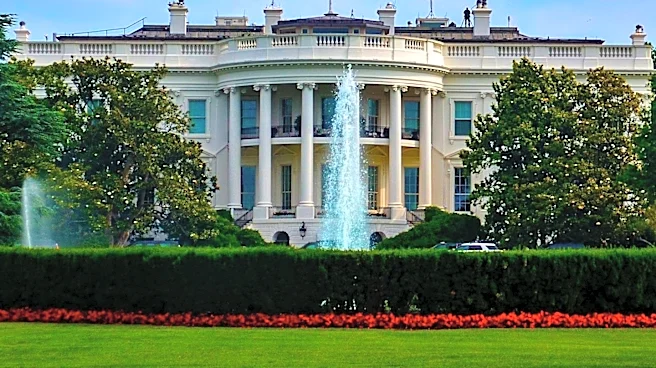
The White House has issued a strong rebuke against comedian Rosie O'Donnell after her guest-hosting appearances on 'Jimmy Kimmel Live' this week. A White House spokesperson, in a statement to Entertainment Weekly, referred to O'Donnell as 'a nasty woman
and a total slob whose brain has been completely destroyed by Trump Derangement Syndrome.' O'Donnell had used her platform during the show to repeatedly criticize President Trump, beginning her first monologue by stating, 'If you thought the president hated 'Jimmy Kimmel Live!' when it was hosted by Jimmy Kimmel? Buckle up, people! Buckle up.' She also joked about living in Ireland due to 'Mango Mussolini' and performed a revised version of 'Danny Boy,' retitled 'Donny Boy,' directly addressing President Trump with critical lyrics about his policies and public image. O'Donnell's representative declined to comment on the White House's statement.
Why It's Important?
This exchange highlights the ongoing and often contentious relationship between political figures and entertainment personalities in the U.S. The White House's direct and personal attack on a comedian for her political commentary underscores a broader trend of heightened rhetoric and polarization in American public discourse. It also raises questions about the role of satire and political humor in late-night television and the reactions they provoke from government officials. For entertainers, such responses can either amplify their message or lead to further controversy, impacting their public perception and potentially influencing future content. For the public, these interactions contribute to the narrative surrounding political leadership and the freedom of expression, particularly when the executive branch directly engages with critics from the entertainment industry.
What's Next?
The immediate aftermath may see continued commentary from both sides, with O'Donnell potentially responding to the White House's statement, or the White House reiterating its stance. This incident could also influence how other late-night hosts and comedians approach political humor, either emboldening them or leading to more cautious approaches. Media outlets will likely continue to cover the back-and-forth, further embedding the dynamic between entertainment and politics into the news cycle. The broader implications could include further discussions on the boundaries of political criticism in entertainment and the appropriate responses from government officials, especially as the next election cycle approaches and political commentary intensifies across all media platforms.
Beyond the Headlines
Beyond the immediate political sparring, this event touches upon deeper cultural and ethical considerations regarding civility in public discourse. The use of highly charged and personal language by the White House against a private citizen, even one in the public eye, can be seen as setting a precedent for acceptable forms of political engagement. It also reflects the erosion of traditional boundaries between political office and personal attacks, potentially normalizing aggressive rhetoric. This dynamic can have long-term effects on how political dissent is perceived and expressed, and how public figures are expected to conduct themselves. The incident also highlights the power of media platforms, like late-night television, to serve as arenas for political commentary and the subsequent reactions they can elicit from the highest levels of government.