
What's Happening?
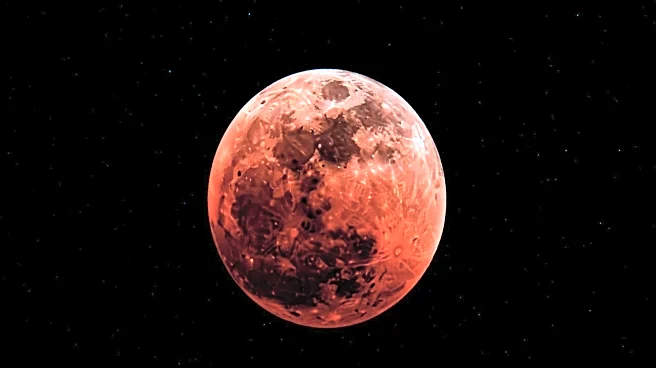
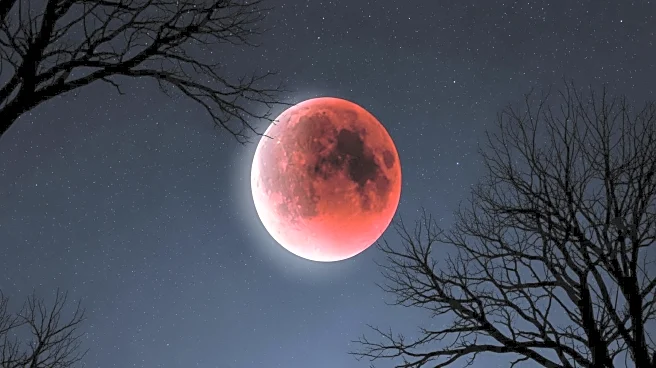
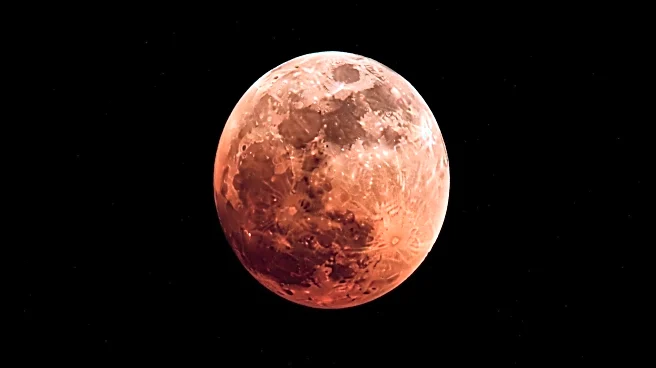
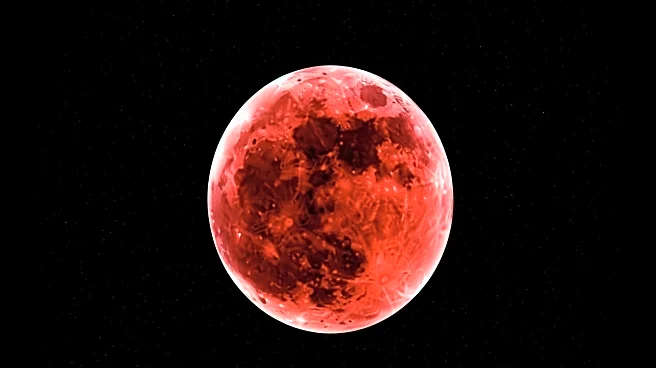
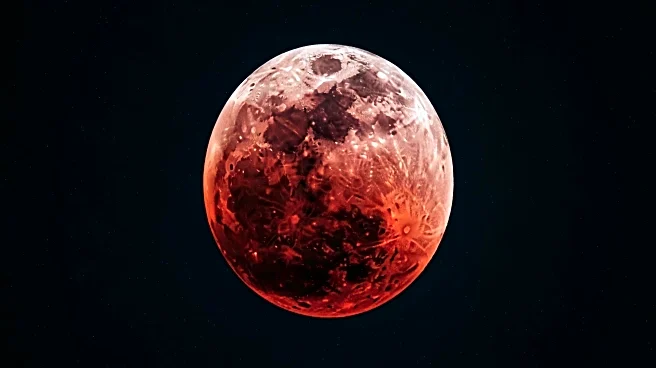
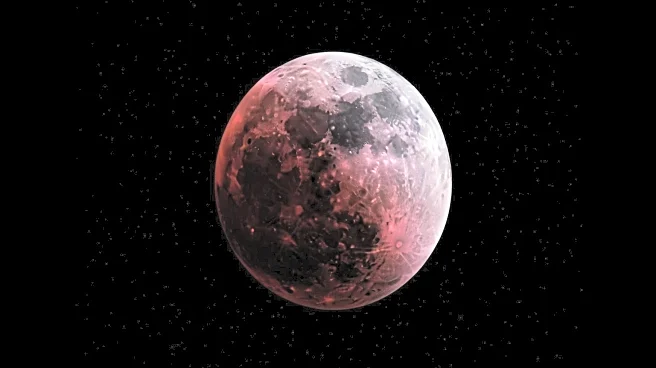
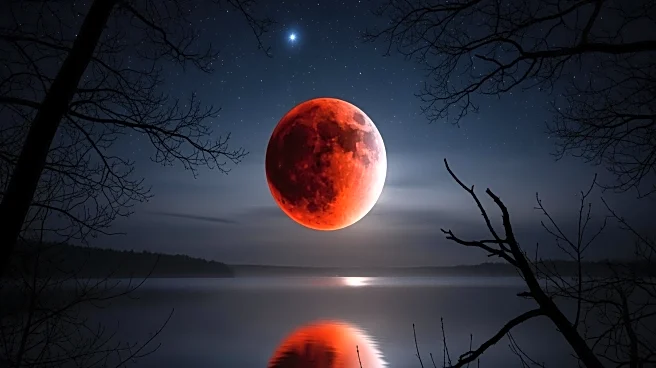
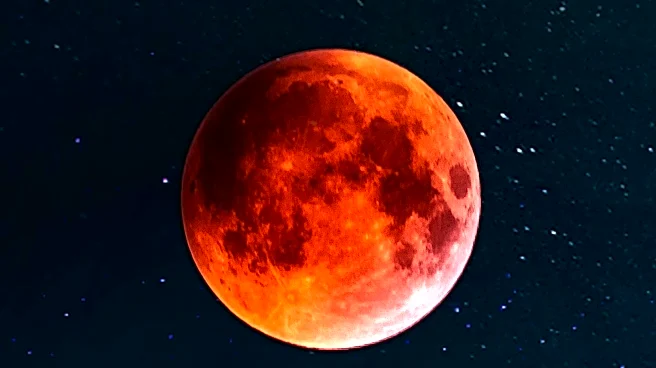
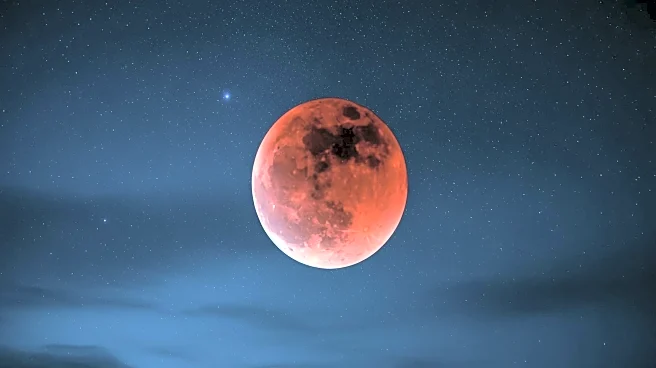
A total lunar eclipse, known as a 'blood moon,' occurred on March 3, 2026, captivating millions around the world. This celestial event, where the moon passes through Earth's shadow, resulted in a reddish hue visible to skywatchers in North America, Australia,
New Zealand, and eastern Asia. The eclipse lasted approximately 5 hours and 39 minutes, with the totality phase, where the moon is fully in Earth's umbra, lasting about an hour. This was the last total lunar eclipse visible in the U.S. until June 26, 2029. The phenomenon is caused by Rayleigh scattering, where Earth's atmosphere filters sunlight, allowing longer red wavelengths to illuminate the moon.
Why It's Important?
The total lunar eclipse is significant as it offers a rare opportunity for millions to witness a natural phenomenon that connects people globally through shared observation. It also serves as a reminder of the intricate dynamics of celestial bodies and their impact on cultural and scientific understanding. For astronomers and enthusiasts, such events provide valuable data and inspire interest in space science. The anticipation for the next visible eclipse in 2029 highlights the rarity and excitement surrounding these occurrences, fostering a sense of global community and curiosity about the universe.
What's Next?
The next total lunar eclipse visible from North America is scheduled for June 26, 2029. Until then, skywatchers can look forward to other astronomical events, such as partial lunar eclipses and solar eclipses, which continue to engage and educate the public about space phenomena. These events also encourage advancements in astronomical research and technology, as scientists prepare to capture and analyze data from future eclipses.