
What's Happening?
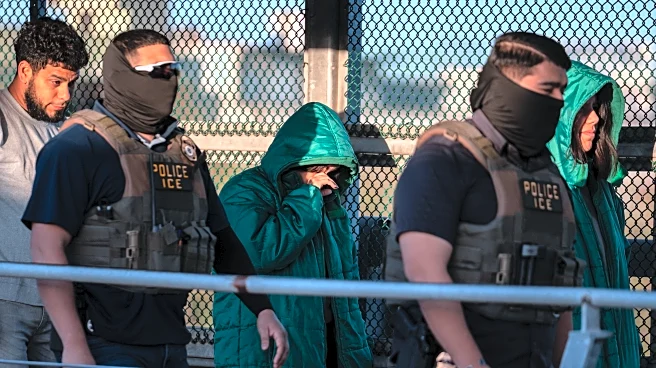
Dylan Lopez Contreras, a 21-year-old Venezuelan student at Ellis Prep Academy in the Bronx, was released after spending 10 months in an Immigration and Customs Enforcement (ICE) detention facility. His detention began in May of the previous year, following
his arrest at an immigration courthouse, which led to widespread public outcry. Contreras's case became notable as it was the first widely known instance of a public school student being detained by federal immigration agents. His release was facilitated by legal efforts and advocacy from figures such as New York Senator Chuck Schumer, who had previously invited Contreras's mother to the State of the Union address. The Department of Homeland Security has released Contreras with a GPS tracking device, pending further legal proceedings.
Why It's Important?
The release of Dylan Lopez Contreras highlights ongoing debates about immigration enforcement policies in the United States, particularly those affecting young immigrants and students. His case underscores the broader implications of ICE's actions on immigrant communities, drawing attention to the potential disruption of educational opportunities and family separations. The involvement of high-profile lawmakers like Senator Schumer indicates the political significance of such cases, as they can influence public opinion and policy discussions. The situation also raises questions about due process and the treatment of immigrants within the U.S. legal system, potentially impacting future immigration policies and enforcement practices.
What's Next?
Following his release, Dylan Lopez Contreras will remain under surveillance with a GPS tracking device as his legal case continues. The outcome of his case could set a precedent for similar situations involving young immigrants and students. Advocacy groups and lawmakers may continue to push for reforms in immigration enforcement practices, particularly those affecting vulnerable populations. The case may also prompt further scrutiny of ICE's operations and policies, potentially leading to legislative or administrative changes aimed at protecting the rights of immigrants and ensuring fair treatment within the legal system.