






What's Happening?
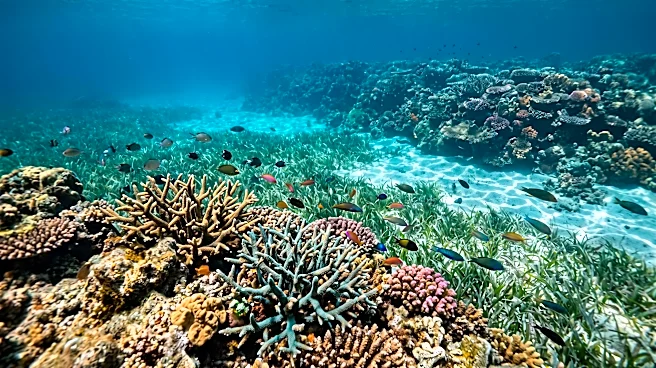
A research team has successfully employed environmental DNA (eDNA) metabarcoding combined with Random Forest machine learning to map fish assemblages across mangrove, seagrass, and coral reef habitats around Hainan Island in the South China Sea. This
innovative approach allowed researchers to identify specific 'connector' and 'super-connector' fish species crucial for maintaining ecological connectivity between these vital coastal marine environments. The study, led by Chunchun Liu and colleagues, detected 234 fish species, a significant increase compared to traditional gillnet sampling which recorded only 58 species. The machine learning model achieved an 87.3% accuracy in predicting fish habitat occurrence and identified salinity and distance to the nearest reef as primary environmental drivers of community turnover. Three super-connector species—Lutjanus russellii, Siganus fuscescens, and Gerres oyena—were found to account for 47% of the total cross-habitat network flow, with their simulated removal leading to a 68% reduction in overall network connectivity.
Why It's Important?
This research introduces a scalable and high-resolution methodological toolkit that significantly advances the understanding of functional ecological connectivity in complex marine ecosystems. By precisely identifying key connector species, the study provides critical data for ecosystem-based fisheries management, enabling more targeted conservation efforts. The ability to pinpoint species that disproportionately maintain connectivity across diverse habitats allows for the prioritization of conservation strategies that can have a broader impact on fish biodiversity and fisheries productivity. This is particularly important in regions like the South China Sea, which are under increasing environmental pressure. The methodology also overcomes limitations of conventional survey methods in turbid and structurally complex marine environments, offering a more comprehensive view of marine fauna and their interactions.
What's Next?
The methodological toolkit developed in this study, combining eDNA metabarcoding with machine learning, is poised to be applied in other tropical coastal seascapes globally. Future research could focus on validating these findings in different geographical contexts and exploring how environmental changes, such as climate change or habitat degradation, might impact the identified connector species and overall network connectivity. The insights gained can inform the development of more effective marine protected areas and sustainable fishing practices. Furthermore, this approach could be expanded to study other marine organisms and their roles in ecosystem health, providing a more holistic understanding of marine biodiversity and resilience.
Beyond the Headlines
The integration of advanced molecular techniques like eDNA with computational power from machine learning represents a significant paradigm shift in ecological research. This interdisciplinary approach moves beyond traditional observational limitations, offering unprecedented detail into the intricate web of marine life. Ethically, this enhanced understanding places a greater responsibility on policymakers and conservationists to act decisively based on more robust scientific evidence. Legally, the precise identification of critical species and habitats could strengthen arguments for stricter environmental regulations and international cooperation in marine conservation. Culturally, a deeper appreciation for the interconnectedness of marine ecosystems, revealed by such studies, could foster greater public engagement and support for ocean stewardship.