

What's Happening?
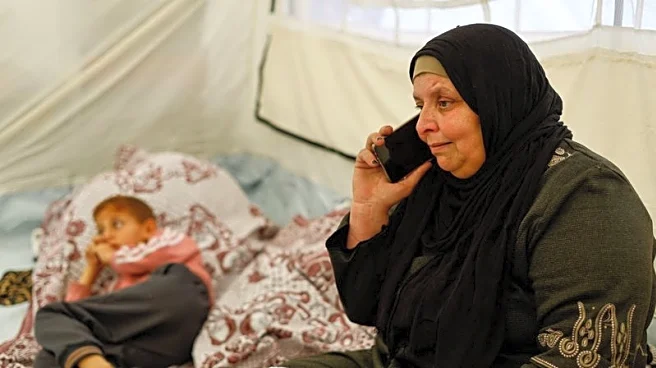
Hamas is calling for increased international pressure on Israel before proceeding with the next phase of the ceasefire in Gaza. The group demands that Israel open a key border crossing, halt military strikes, and allow more humanitarian aid into the territory.
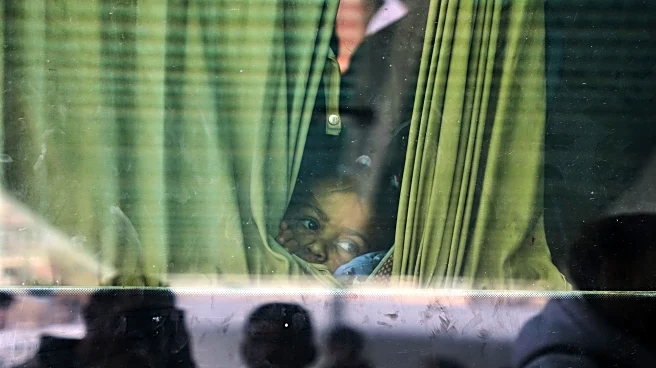
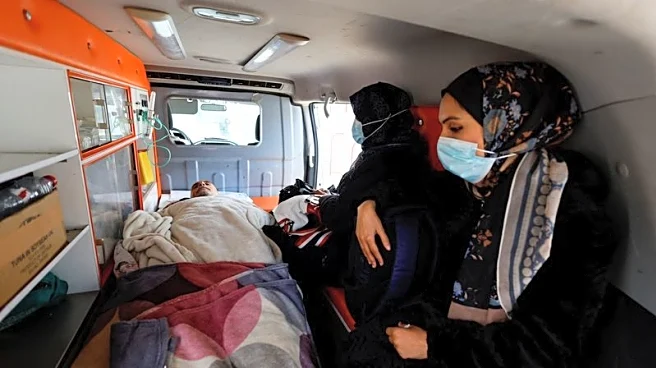
This comes as Israel claims readiness to move into the next phase of the ceasefire, contingent on Hamas returning the remains of the last Israeli hostage. The ceasefire, brokered by the U.S., aims to stabilize Gaza and involves forming an international body to govern the region. However, ongoing Israeli military operations have resulted in significant Palestinian casualties, complicating the situation.
Why It's Important?
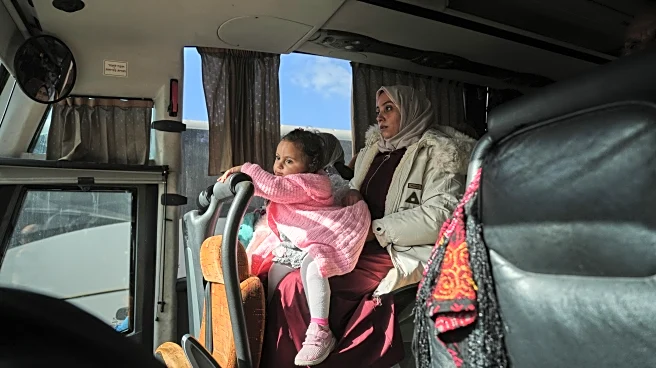
The demands by Hamas highlight the fragile nature of the ceasefire and the challenges in achieving lasting peace in Gaza. The humanitarian crisis in the region is severe, with insufficient aid reaching the population. The success of the ceasefire is crucial for the stability of the region and the well-being of its residents. Failure to address these issues could lead to renewed conflict and further humanitarian suffering. The international community's role in mediating and supporting the ceasefire is critical to its success.
What's Next?
Negotiations are expected to continue, with regional powers like Qatar and Turkey potentially influencing Hamas' stance. The formation of an international governing body for Gaza is anticipated by the end of the year. The outcome of these negotiations will determine the future of the ceasefire and the potential for long-term peace in the region. The international community will need to address the humanitarian needs in Gaza and ensure that aid reaches those in need.