

What's Happening?
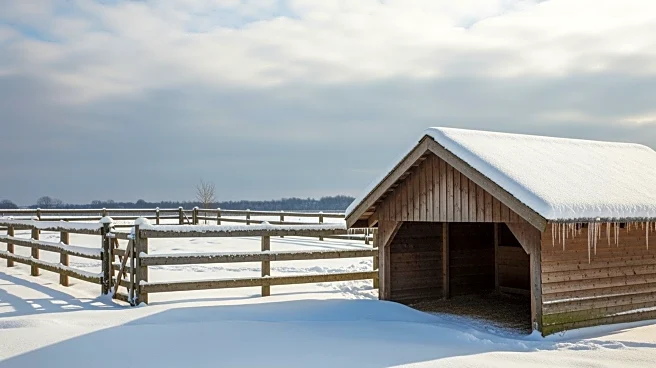
Brockswood Animal Sanctuary in Sedgley has suffered significant damage due to heavy snowfall from Storm Goretti. Five large enclosures collapsed under the weight of the snow, resulting in the death of a duck named Lilly. The sanctuary, which has been
operational for 20 years, is facing one of its most challenging times. Claire Thompson, the sanctuary manager, expressed her distress over the incident, noting the potential for greater loss. Neil Swann, the director, mentioned that although the enclosures were designed to withstand snow, the recent storm brought an unprecedented amount of snow, causing severe damage. The sanctuary is now seeking community support and has initiated an online fundraising campaign to repair the enclosures. In the interim, displaced animals have been relocated within the sanctuary, with some unconventional arrangements made to ensure their safety.
Why It's Important?
The damage to Brockswood Animal Sanctuary highlights the vulnerability of animal care facilities to extreme weather events. This incident underscores the need for robust infrastructure capable of withstanding such conditions, especially as climate change may increase the frequency and severity of storms. The sanctuary's plight also emphasizes the importance of community support in maintaining animal welfare organizations. The financial burden of repairs could impact the sanctuary's ability to care for sick, injured, and mistreated animals, potentially affecting animal welfare in the region. The situation calls attention to the broader implications of climate resilience for non-profit organizations and the critical role of public support in their sustainability.
What's Next?
Brockswood Animal Sanctuary is actively seeking financial assistance to repair the damaged enclosures. The community has already begun to offer help, and an online fundraising page has been set up to gather donations. The sanctuary will need to assess the full extent of the damage and prioritize repairs to ensure the safety and well-being of the animals. In the long term, the sanctuary may need to consider additional measures to enhance the resilience of its infrastructure against future weather events. The response from the local community and potential donors will be crucial in determining the sanctuary's recovery and continued operation.