








What's Happening?
Dogs in the United States are susceptible to various tick-borne diseases, notably hepatozoonosis, caused by single-celled organisms called Hepatozoon. Two primary species, Hepatozoon americanum and Hepatozoon canis, are responsible for different forms
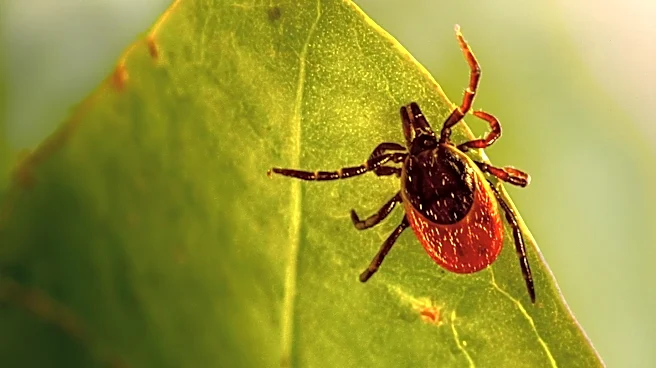
of the disease. H. americanum is transmitted by the Gulf Coast tick and is most prevalent in the southern and southeastern U.S. Dogs become infected by ingesting an infected tick or another animal carrying the parasite. Once ingested, the organism spreads to organs like the spleen, liver, lymph nodes, bone marrow, lungs, and skeletal muscles, forming cysts that cause inflammation. H. canis, transmitted by the brown dog tick, is found in several countries, including the U.S., and is more common in tropical regions. While H. canis also spreads to various organs, it typically does not cause muscle cysts or severe muscle pain. Symptoms for H. americanum can include fever, lethargy, weight loss, muscle pain, and eye/nose discharge, often being fatal without treatment. H. canis infections are often asymptomatic, but severe cases can lead to fever, weight loss, anemia, and an enlarged spleen. Prevention primarily involves regular use of veterinarian-recommended tick preventives.
Why It's Important?
The prevalence of tick-borne diseases like hepatozoonosis represents a significant health concern for dog owners and the veterinary community across the U.S. The differing geographical distributions of the transmitting ticks, such as the Gulf Coast tick for H. americanum and the brown dog tick for H. canis, highlight regional variations in disease risk. The potential for severe and even fatal outcomes, particularly with H. americanum, underscores the importance of proactive prevention and early diagnosis. The fact that H. americanum can cause long-term inflammation and muscle cysts, requiring prolonged treatment, impacts the quality of life for affected dogs and imposes financial burdens on owners. Furthermore, the ability of infected ticks to pass the infection to their offspring means that these diseases can become widespread within local tick populations, increasing the overall risk to canine populations. Effective tick prevention strategies are crucial not only for individual pet health but also for broader public health efforts to control tick populations and the diseases they carry, even though hepatozoonosis itself does not infect humans.
What's Next?
Ongoing efforts will focus on educating pet owners about the risks of tick-borne diseases and the importance of consistent tick prevention. Veterinarians will continue to recommend and prescribe effective tick preventives, such as collars, pipettes, sprays, and shampoos, to mitigate exposure. Research into more effective treatments and diagnostic methods for hepatozoonosis and other tick-borne illnesses is likely to continue. Public health initiatives may also target tick population control in high-risk areas, particularly in the southern and southeastern U.S. where H. americanum is more common. For dogs diagnosed with hepatozoonosis, treatment protocols will involve specific medications tailored to the Hepatozoon species, often requiring long-term management to achieve remission. Regular follow-up with veterinarians will be essential to monitor the dog's condition and adjust treatment as needed, emphasizing the need for sustained vigilance against tick exposure.
Beyond the Headlines
The challenge of tick-borne diseases extends beyond immediate pet health, touching upon broader ecological and environmental considerations. The increasing geographic range of certain tick species due to climate shifts could lead to the emergence of these diseases in previously unaffected regions, necessitating adaptive public health and veterinary responses. The reliance on chemical preventives also raises questions about environmental impact and the potential for tick resistance, prompting a need for diversified control strategies. Moreover, the 'one health' approach, recognizing the interconnectedness of human, animal, and environmental health, becomes increasingly relevant. While hepatozoonosis does not directly infect humans, the presence of disease-carrying ticks in shared environments underscores the importance of managing tick populations for the well-being of both pets and people. This situation highlights the continuous interplay between wildlife, domestic animals, and human activity in shaping disease landscapes.