



What's Happening?
Governor Ron DeSantis has signed Executive Order 26-33 to assist Florida's agricultural sector, which has been severely impacted by recent winter weather and ongoing drought conditions. The executive order aims to facilitate emergency harvesting and expedite
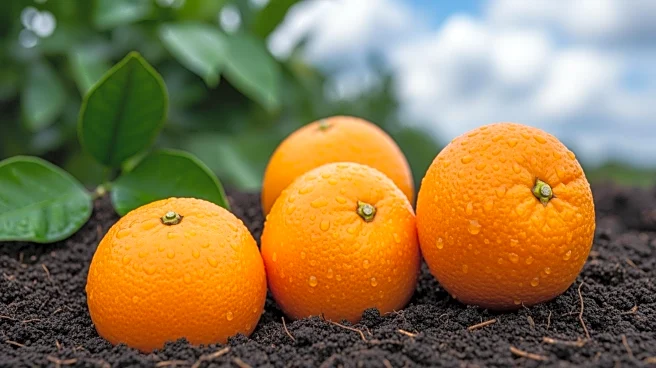
recovery efforts to mitigate further losses. Florida has experienced unusually cold temperatures, ranging from the 20s to mid-30s, and is currently facing significant drought, with over 95% of the state affected. The drought is particularly severe in the Big Bend and southwest regions, with more than 50% of the state experiencing severe drought conditions. The citrus industry, a major component of Florida's agriculture, has been notably affected, having already seen a decline of about 90% over the past two decades due to disease and extreme weather. The executive order has been welcomed by local leaders, including Lt. Jay Collins and Congressman Byron Donalds, who emphasized the importance of supporting the state's farmers.
Why It's Important?
The executive order is crucial for Florida's agricultural sector, which plays a significant role in the state's economy and food supply. The recent weather conditions have exacerbated existing challenges faced by farmers, particularly in the citrus industry, which is a key economic driver. By facilitating emergency measures and recovery efforts, the order aims to stabilize the agricultural sector and prevent further economic losses. This move underscores the importance of food security, as highlighted by Lt. Jay Collins, who linked it to national security. The support from state leaders reflects a broader recognition of the need to protect and sustain the agricultural industry, which is vital for both local and national food supply chains.
What's Next?
The implementation of the executive order will involve coordinated efforts to provide immediate assistance to affected farmers. This includes facilitating emergency harvesting and expediting recovery processes. The state will likely monitor the situation closely to assess the effectiveness of these measures and make necessary adjustments. Additionally, there may be further discussions and actions at the state level to address long-term challenges faced by the agricultural sector, such as disease management and climate resilience. Stakeholders, including government officials and agricultural organizations, will need to collaborate to ensure the sustainability of Florida's agriculture in the face of ongoing environmental challenges.