






What's Happening?
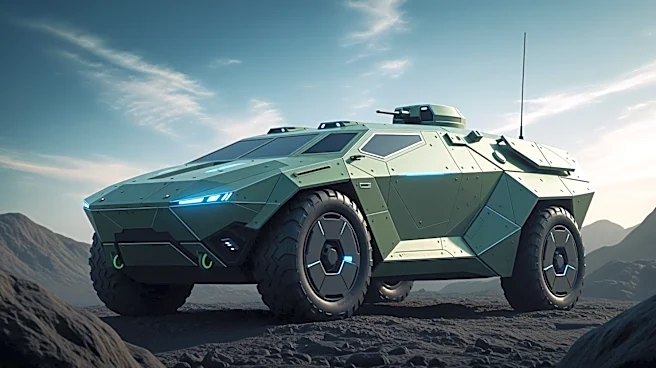
The U.S. Army is advancing its fleet of Infantry Squad Vehicles (ISVs) by introducing a heavier, hybrid-powered variant known as the ISV-Heavy. This development is part of a three-contract effort to add 606 ISV-Heavy vehicles to the existing fleet of approximately
1,105 ISVs. The ISV-H is designed to support a range of mission areas, including command and control, medical evacuation, and drone operations. A key feature of the ISV-H is its hybrid-electric design, which allows for 'silent drive' and 'silent watch' modes, enhancing stealth capabilities in high-threat zones. The vehicle also functions as a mobile energy source, capable of generating and exporting significant power to support small units in the field.
Why It's Important?
The introduction of the ISV-Heavy represents a strategic enhancement of the U.S. Army's operational capabilities. By incorporating hybrid-electric technology, the Army aims to improve the stealth and energy efficiency of its vehicles, which is crucial for modern warfare scenarios. The ability to generate and export power in the field provides tactical advantages, enabling sustained operations without reliance on external power sources. This development aligns with broader military trends towards electrification and sustainability, potentially influencing future procurement and operational strategies. The ISV-H's capabilities could also impact defense contractors and the military vehicle industry, as demand for advanced, multi-functional vehicles increases.
What's Next?
The Army has completed the initial phase of the ISV-H procurement process, with industry white papers already collected. The next steps involve presentations and final proposals, although specific timelines have not been disclosed. As the Army progresses with this initiative, it will be important to monitor how the ISV-H is integrated into existing military operations and its impact on mission effectiveness. Additionally, the response from defense contractors and potential innovations in vehicle design and technology will be key areas to watch as the Army continues to modernize its fleet.