



What's Happening?
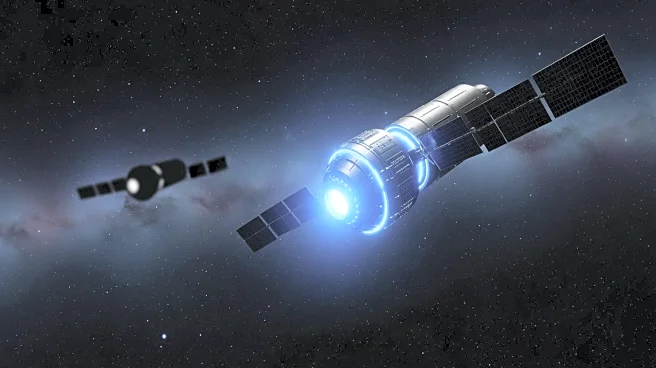
SpaceX's Starlink satellites narrowly avoided a collision with a Chinese spacecraft on December 10, 2025. The incident occurred when a satellite from a Chinese Kinetica 1 rocket came within 200 meters of the Starlink-6079 satellite, traveling at speeds
over 17,400 miles per hour. This close encounter has raised concerns about the increasing congestion in low Earth orbit. SpaceX's vice president of engineering described the situation as 'disturbingly close' and emphasized the need for better coordination among international satellite operators. The event highlights the challenges of managing the growing number of satellites, as SpaceX's Starlink constellation alone performed 145,000 collision avoidance maneuvers in the first half of 2025. Meanwhile, SpaceX celebrated its 100th Falcon 9 launch on December 14, 2025, from Cape Canaveral, deploying 29 Starlink satellites, marking a significant milestone for the company.
Why It's Important?
The near-collision between SpaceX's Starlink satellite and a Chinese spacecraft underscores the urgent need for improved international coordination in space operations. As the number of satellites in orbit continues to grow, the risk of collisions increases, potentially leading to catastrophic debris events that could jeopardize future space missions. The incident highlights the importance of establishing formal protocols for sharing trajectory information among satellite operators to ensure orbital safety. SpaceX's achievement of 100 Falcon 9 launches in 2025 demonstrates its dominance in the commercial launch market, but also points to the increasing complexity of managing space traffic. The situation calls for international cooperation to develop sustainable practices for space operations, which is crucial for the continued expansion of satellite internet services and other space-based technologies.
What's Next?
The December 2025 incident may prompt discussions among international space agencies and private companies to establish binding agreements for pre-launch coordination and trajectory sharing. As SpaceX and other companies continue to expand their satellite constellations, there is a pressing need for global standards to manage space traffic and prevent collisions. The development of automated collision avoidance systems and improved tracking data from global space surveillance networks will be critical in addressing these challenges. The future of satellite internet and other space-based services depends on the successful implementation of these measures to ensure the long-term sustainability of low Earth orbit.
Beyond the Headlines
The close call between Starlink and the Chinese spacecraft raises broader questions about the governance of space and the responsibilities of satellite operators. The lack of a binding international treaty for space traffic management highlights the need for a collaborative approach to address the growing risks associated with satellite megaconstellations. The incident also underscores the potential impact on space-based astronomy and scientific research, as increased satellite traffic could interfere with observations and data collection. As the space industry continues to evolve, ethical considerations regarding the use of space and the protection of the orbital environment will become increasingly important.