





What's Happening?
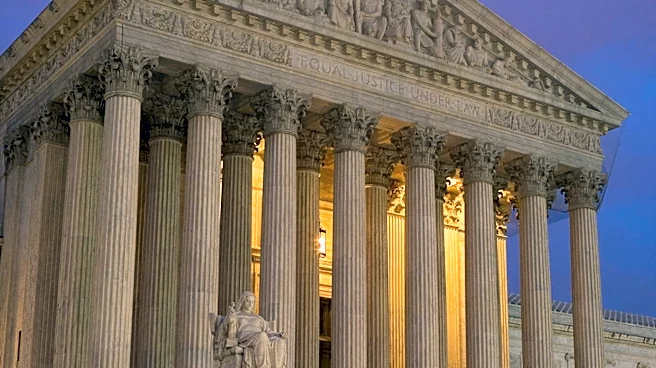
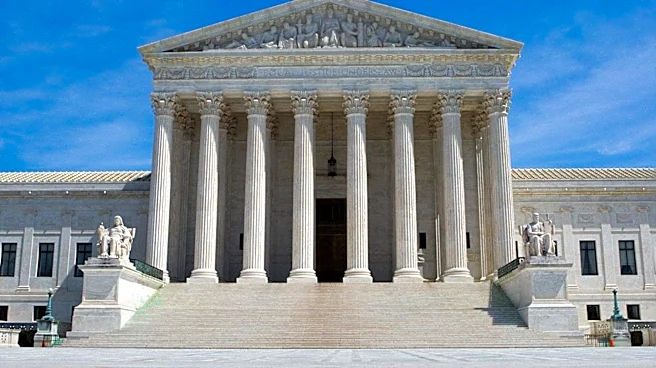
The U.S. Supreme Court has agreed to review a D.C. Circuit ruling that allowed discovery to determine if the U.S. DOGE Service (DOGE) qualifies as an agency subject to the Freedom of Information Act (FOIA). This case originated from a lawsuit filed by
Citizens for Responsibility and Ethics in Washington (CREW) in February 2025, alleging that DOGE, its administrator, and other government entities violated FOIA and the Federal Records Act by failing to release requested records and preserve federal records. CREW contended that DOGE held significant authority over federal agencies, thus qualifying it as an agency under FOIA. The district court initially granted limited discovery, including a deposition and document requests, which the government challenged, citing separation-of-powers concerns. The D.C. Circuit largely upheld the discovery, leading to the Supreme Court's intervention. The Supreme Court had previously granted review, vacated the D.C. Circuit's decision, and remanded the case with instructions to limit discovery into internal executive branch recommendations, emphasizing the protection of confidential executive branch communications. Despite this, the D.C. Circuit denied the government's mandamus petition for the remaining, narrower discovery requests, prompting the current Supreme Court review.
Why It's Important?
This Supreme Court review is crucial for defining the scope of FOIA applicability to entities within the executive branch and for clarifying the boundaries of executive privilege. The government argues that the D.C. Circuit's decision conflicts with the Supreme Court's prior order and its precedent in *Cheney v. United States District Court*, which mandates judicial restraint in discovery involving presidential advisers to protect executive branch functions and confidential communications. The outcome will determine whether entities like DOGE, which the government claims serve only an advisory role, can be subjected to broad discovery to ascertain their agency status under FOIA. A ruling in favor of broad discovery could set a precedent for increased transparency and accountability for various governmental bodies, potentially exposing presidential advisers to similar discovery in future FOIA lawsuits. Conversely, a ruling limiting discovery would reinforce executive privilege and potentially shield certain governmental operations from public scrutiny, impacting the public's right to information regarding government functions.
What's Next?
The U.S. Supreme Court will now hear arguments to determine whether the lower courts improperly allowed discovery into DOGE's operations. The Court will specifically address the government's arguments that the D.C. Circuit's decision violated established precedent regarding executive privilege and the scope of FOIA. CREW will counter by arguing that the D.C. Circuit followed the Supreme Court's prior instructions and that the remaining discovery requests are necessary to determine if DOGE exercises substantial independent authority, making it subject to FOIA. The Court's decision will provide critical guidance on the balance between government transparency and the protection of executive branch communications, potentially influencing future FOIA litigation and the operational transparency of advisory bodies within the federal government.