





What's Happening?
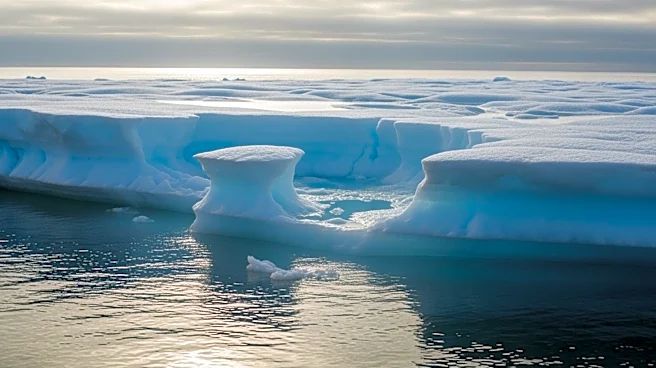
Recent research indicates that Antarctic ice shelves are melting from below at a faster rate than previously anticipated. This discovery, made by scientists in Norway, highlights a process where long channels carved into the undersides of ice shelves trap
relatively warm ocean water, intensifying melting in specific areas. The study focused on the Fimbulisen Ice Shelf in East Antarctica, revealing that the shape of the ice shelf's underside significantly affects seawater circulation beneath it. This trapped warmth increases melting, potentially weakening the ice shelves' ability to hold back glaciers, which could accelerate global sea level rise. The findings underscore the vulnerability of even the colder regions of Antarctica, which were previously considered less susceptible to such rapid changes.
Why It's Important?
The accelerated melting of Antarctic ice shelves poses a significant risk to global sea levels. As these ice shelves thin and weaken, they may lose their capacity to restrain the glaciers behind them, leading to increased ice flow into the ocean. This could result in a faster rise in sea levels, impacting coastal communities worldwide. The study's findings are crucial for improving climate models and sea level rise projections, which are essential for coastal planning and adaptation strategies. Additionally, the changes in ice shelf stability could alter ocean circulation patterns and affect marine ecosystems in the Southern Ocean, further emphasizing the need for accurate climate predictions.
What's Next?
The research suggests that current climate models may underestimate the sensitivity of Antarctic ice shelves to warming ocean conditions. As a result, there is a need for updated models that incorporate these new findings to better predict future changes. Scientists will likely continue to monitor the ice shelves and refine their models to improve the accuracy of sea level rise projections. This ongoing research is vital for informing global climate policy and adaptation efforts, as well as for understanding the broader implications of Antarctic ice melt on global ocean systems.
Beyond the Headlines
The study highlights the complex interactions between ice shelf topography and ocean currents, which can create feedback loops that exacerbate melting. This underscores the importance of detailed mapping and modeling of ice shelf structures to fully understand their dynamics. The research also points to the potential for unexpected vulnerabilities in regions previously thought to be stable, challenging assumptions about the resilience of Antarctic ice. These insights could lead to a reevaluation of global climate risk assessments and adaptation strategies.