
What's Happening?
The Islamic World Educational, Scientific and Cultural Organization (ICESCO) has called for accelerated climate action in the Global South through the implementation of circular economy policies. Dr. Salim
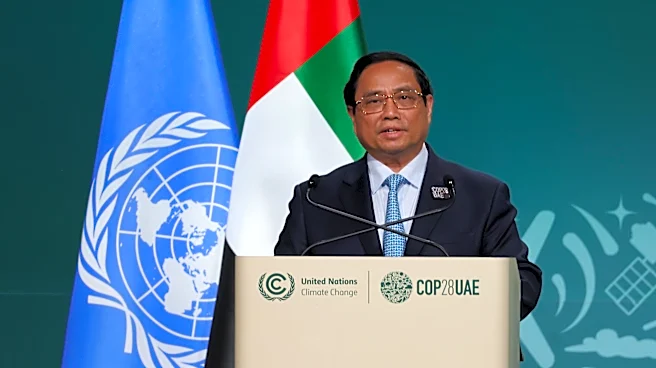
M. AlMalik, Director-General of ICESCO, emphasized that transitioning to a circular economy is an economic and development priority due to its direct impact on environmental protection. He highlighted that this approach presents an opportunity for countries in the Global South by reducing waste and pollution, improving resource efficiency, lowering emissions, and creating new economic opportunities. These remarks were made during a High-Level Dialogue on Accelerating Climate Action, co-hosted by ICESCO, the Statistical, Economic and Social Research and Training Centre for Islamic Countries (SESRIC), the Yunus Environment Hub, and the Commission on Science and Technology for Sustainable Development in the South (COMSATS). The event took place at the Republic of Türkiye Pavilion during the 31st United Nations Climate Change Conference (COP31) in Antalya, Türkiye.
Why It's Important?
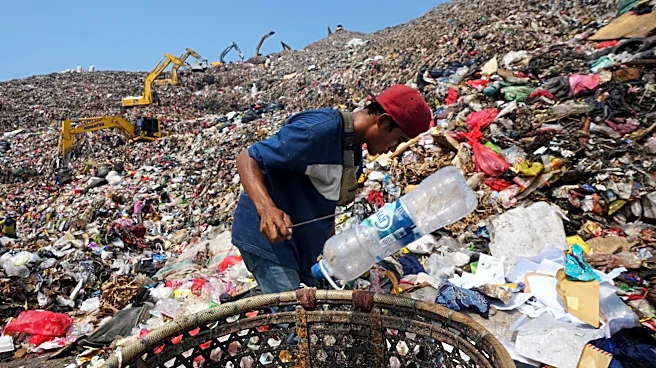
The push for circular economy policies in the Global South is significant because these regions often face disproportionate impacts from climate change and resource depletion. By adopting circular economy principles, these nations can mitigate environmental damage while simultaneously fostering economic growth and innovation. The current global reliance on linear production and consumption patterns, with only about 6.9% of materials being recycled, underscores the urgent need for systemic change. ICESCO's initiative aims to bridge this gap by providing practical guidance and supporting Member States in developing regulatory frameworks, institutional capacities, and access to financing. This approach can lead to more sustainable development pathways, reduce dependence on finite resources, and create resilient economies less vulnerable to global supply chain disruptions and environmental crises.
What's Next?
ICESCO plans to continue supporting its Member States in achieving sustainable development by leveraging scientific and technological advancements and promoting innovation. The organization is currently preparing a technical report that will outline options for waste management and pollution reduction, specifically tailored to the circular economy approach for its Member States. This report will offer practical guidance, helping each country identify strategies best suited to its unique circumstances and providing recommendations to address existing gaps in implementation. Future steps will likely involve strengthening cooperation among governments, academia, international organizations, and the private sector to facilitate the adoption and scaling of circular economy initiatives across the Global South.
Beyond the Headlines
The advocacy for a circular economy extends beyond immediate environmental benefits, touching upon broader ethical and economic dimensions. It challenges the traditional 'take-make-dispose' model, promoting a more regenerative system that values resource longevity and waste minimization. For the Global South, this shift could foster greater economic sovereignty by reducing reliance on imported raw materials and creating local value chains. Ethically, it addresses environmental justice concerns, as these regions often bear the brunt of global pollution and resource exploitation. The long-term implications include the potential for new industries, green job creation, and enhanced regional collaboration on sustainable practices, ultimately contributing to a more equitable and environmentally responsible global economy.