



What's Happening?
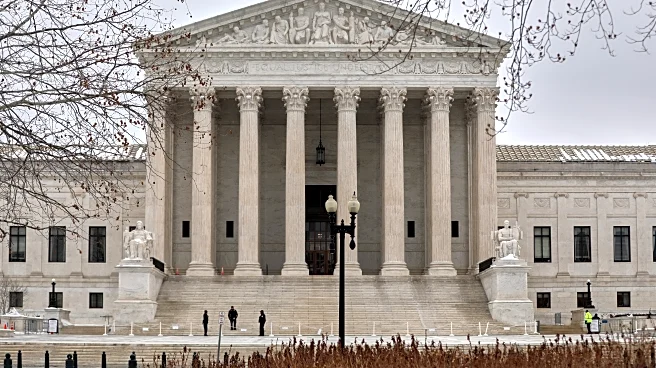
President Donald Trump announced an increase in global tariffs to 15% after the Supreme Court ruled against his previous tariff measures. The Supreme Court's decision, which was a 6-3 ruling, stated that Trump had exceeded his authority under the International
Emergency Economic Powers Act of 1977. This act allows presidents to regulate commerce during national emergencies, but the court found that it was improperly used to impose tariffs aimed at addressing trade imbalances and halting fentanyl smuggling. In response, Trump plans to use the Trade Act of 1974 to justify the new tariffs, which are set to expire after 150 days. The decision has led to a rise in metals prices, including gold and silver, due to market uncertainty.
Why It's Important?
The increase in tariffs could have significant implications for international trade and the U.S. economy. By raising tariffs, President Trump aims to address what he perceives as unfair trade practices by other countries. However, this move could lead to increased costs for U.S. businesses and consumers, as imported goods become more expensive. The decision also highlights the ongoing tension between the executive branch and the judiciary over the limits of presidential power. The ruling may prompt further legal challenges and could influence future trade negotiations and policies.
What's Next?
The Trump administration is expected to explore additional legal avenues to impose tariffs, which may involve more time-consuming processes and official investigations. The tariffs are temporary, expiring after 150 days, which means there could be further developments in the coming months. Stakeholders, including businesses and trade partners, will likely monitor the situation closely and may seek to renegotiate trade deals affected by the tariffs. The administration's actions could also prompt reactions from Congress and international trade partners.