



What's Happening?
AdkAction, in collaboration with the SUNY College of Environmental Science and Forestry (SUNY ESF) Ranger School, is conducting a research project to convert log landings into native pollinator habitats. Log landings are disturbed clearings in forests
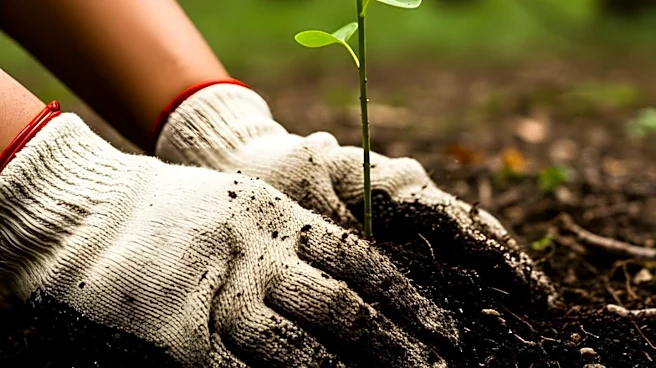
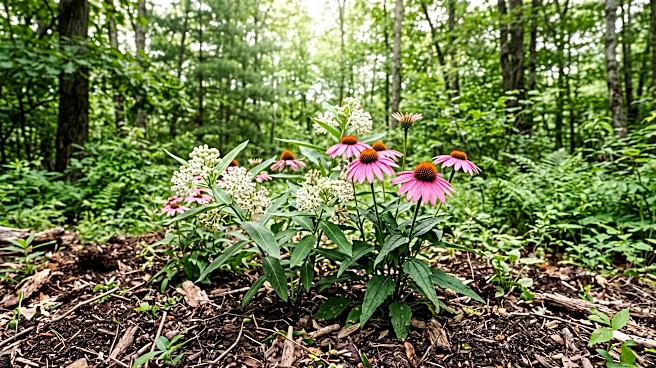
used for staging timber, typically left to regenerate slowly. The project aims to determine if these sites can be intentionally managed to support pollinators. Initial tests in Wanakena involved minimal site preparation, such as hand-raking wood debris, to assess the effectiveness of low-intervention methods. A second phase at the Charles Lathrop Pack Demonstration Forest in Warrensburg is exploring more intensive site preparation, including the use of a tow-behind road rake to clear debris and grade soil, and the application of lime to adjust soil pH. Researchers are sowing custom Adirondack Pollinator Seed Mixes, including milkweed and coneflower, along with rye as a nurse crop, to observe which native plant species thrive in the compacted, acidic soils common to log landings.
Why It's Important?
This initiative is significant for ecological restoration and sustainable forestry practices in the U.S., particularly in regions like the Adirondacks. Pollinator populations are in decline, and creating new habitats is crucial for supporting biodiversity and agricultural ecosystems. By transforming disturbed log landings into pollinator-friendly areas, the project offers a cost-effective and scalable solution for habitat creation within existing forestry operations. This could lead to a standardized post-harvest practice that benefits local ecosystems without requiring extensive land conversion. The research will provide valuable data on the most effective and economical site preparation techniques and identify native plant species best suited for these challenging soil conditions. This knowledge can inform landowners, loggers, and foresters, encouraging broader adoption of pollinator habitat restoration as an integral part of forest management, thereby contributing to regional ecological health and resilience.
What's Next?
The project is currently in a waiting phase, as many of the wildflower seeds sown require cold stratification (a freeze-thaw cycle) to sprout. Substantial data on seed germination and plant growth is not expected until spring 2027. Researchers will return to the Wanakena and Warrensburg sites in the spring to assess which seeds have taken root, which plots are blooming, and how different site preparation methods have influenced growth. The findings will help answer critical questions regarding the minimum effective site preparation, the cost-efficiency of various techniques, and the specific native plant species that thrive in log landing conditions. This data will be crucial for developing practical guidelines and tools to make pollinator habitat restoration a standard practice across the Adirondacks and potentially other forested regions.
Beyond the Headlines
The AdkAction and SUNY ESF project delves into the deeper implications of integrating ecological goals with industrial practices. It highlights the potential for forestry operations, often viewed as disruptive, to become agents of ecological restoration. This initiative challenges the traditional separation between resource extraction and environmental conservation, proposing a model where they can coexist and even complement each other. Ethically, it underscores a responsibility to mitigate the environmental impact of logging by actively contributing to biodiversity. Legally, if successful, this research could influence future forestry regulations and best management practices, potentially leading to incentives for landowners and logging companies to implement similar restoration efforts. Culturally, it fosters a greater appreciation for the ecological value of seemingly barren industrial sites and promotes a more holistic understanding of land stewardship, where every part of the landscape, even disturbed areas, can contribute to ecological health.