



What's Happening?
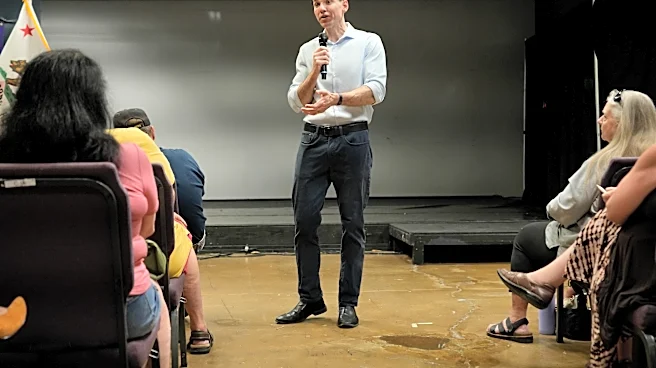
David Giralt is actively campaigning to become Wyoming's next U.S. Representative, a seat currently held by Rep. Harriet Hageman. Giralt is distinguishing himself in a crowded Republican primary field by highlighting his extensive experience working in Washington
D.C. for top Republican members of Congress, including a stint as a Department of Defense Fellow for Rep. Mike Rogers and civilian work for Senator Cynthia Lummis. He emphasizes his military service, including 12 years in the Army with combat deployments and a Bronze Star, as foundational to his approach to public service. Giralt is positioning himself as a 'Wyoming First' candidate, prioritizing the state's interests over party loyalty or national agendas when conflicts arise. He is also leveraging endorsements from several Republican members of Congress and musician Ted Nugent to bolster his campaign, arguing that these endorsements validate his practical experience and commitment to Wyoming's needs.
Why It's Important?
Giralt's campaign strategy underscores a significant theme in contemporary U.S. politics: the value placed on practical experience within the federal legislative process versus traditional political careers. His emphasis on a 'Wyoming First' agenda reflects a broader sentiment among voters in many states who seek representatives dedicated to local interests, particularly concerning issues like public lands, energy dominance, and rural healthcare. For Wyoming, a state heavily reliant on industries such as coal, oil, and gas, Giralt's commitment to consistent federal policy supporting these sectors is crucial. His military background and D.C. experience could appeal to voters looking for a representative who understands the intricacies of federal policymaking and can effectively advocate for the state's economic and social priorities. The outcome of this primary will indicate whether voters prioritize direct federal experience and a 'state-first' approach over other candidates' platforms.
What's Next?
As the primary election approaches, Giralt will continue to articulate his 'Wyoming First' platform, focusing on key voter concerns such as maintaining federal public lands for multi-use management, ensuring energy dominance across various resources (coal, oil, gas, uranium, critical minerals), addressing cost of living and housing pressures, and improving veterans' care and rural healthcare systems. He will likely intensify his efforts to differentiate himself from other candidates, particularly Secretary of State Chuck Gray and Steve Friess, by emphasizing his unique blend of military service and federal legislative experience. The effectiveness of his endorsements from congressional colleagues and Ted Nugent in swaying voters will be a critical factor. Should Giralt win the primary, he would be favored to represent Wyoming in the House of Representatives, given the state's strong Republican leanings. His subsequent actions in Congress would then be closely watched to see how he translates his 'Wyoming First' promises into tangible policy outcomes.
Beyond the Headlines
Giralt's campaign highlights a growing trend where candidates with non-traditional political backgrounds, particularly those with military service and direct experience in federal operations, are seeking elected office. This trend suggests a voter appetite for representatives perceived as pragmatic and results-oriented, rather than career politicians. His focus on 'Wyoming First' also reflects a broader national discussion about federalism and the balance between state and national interests, particularly in resource-rich states. The emphasis on energy dominance, including fossil fuels, in Wyoming's political discourse points to the ongoing tension between economic development and environmental concerns, a debate that continues to shape U.S. energy policy. Furthermore, the role of endorsements from figures like Ted Nugent, known for their outspoken views on individual liberty and the Second Amendment, illustrates the influence of cultural and ideological alignment in contemporary political campaigns, especially in conservative states.