








What's Happening?
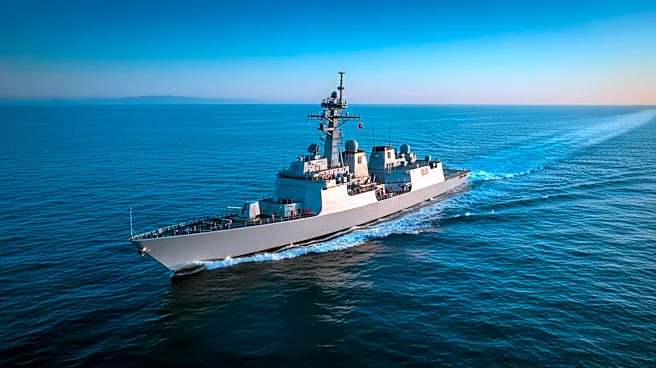
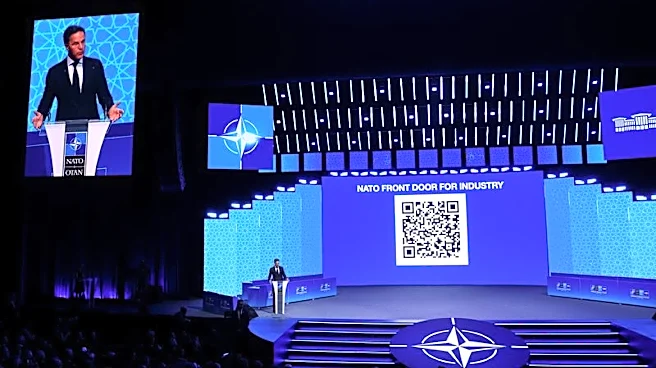
NATO allies and Gulf Arab ministers are meeting to discuss tensions in the Strait of Hormuz. France and Britain are proposing a multinational maritime mission to ensure safe passage through this critical waterway. The meeting, held on the sidelines of a NATO summit
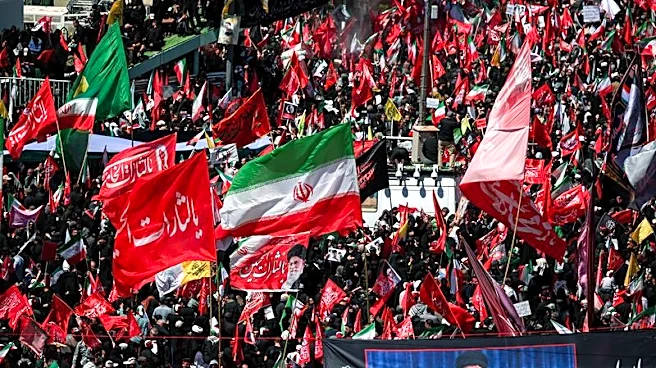
in Ankara, includes ministers from Bahrain, Kuwait, Qatar, and the UAE. Despite an interim U.S.-Iran peace deal, tensions remain high, with recent missile attacks on commercial ships by Iran's Revolutionary Guards. The initiative faces challenges, as Iran opposes foreign military presence in the region.
Why It's Important?
The Strait of Hormuz is a vital chokepoint for global oil supply, with about a fifth of the world's oil passing through it. Continued tensions threaten global energy security and could lead to increased shipping costs and supply chain disruptions. The involvement of NATO and Gulf states highlights the international community's concern over regional stability. The proposed maritime mission aims to deter further aggression and ensure the free flow of commerce, but its success depends on diplomatic negotiations with Iran.
What's Next?
The outcome of the NATO and Gulf Arab ministers' meeting could shape future diplomatic and military strategies in the region. France and Britain are leading efforts to form a coalition to secure the strait, but long-term solutions require Iran's cooperation. The international community will closely monitor Iran's response and any potential escalation of tensions. The situation underscores the need for a comprehensive diplomatic approach to address underlying geopolitical issues.