


What's Happening?
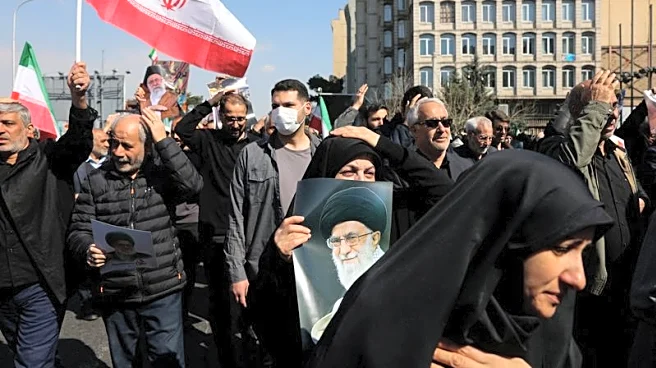
Iran is experiencing significant challenges in organizing the funeral of its late Supreme Leader, Ayatollah Ali Khamenei. The original plan for a three-stage procession through Tehran, Qom, and Mashhad has been repeatedly altered due to security concerns
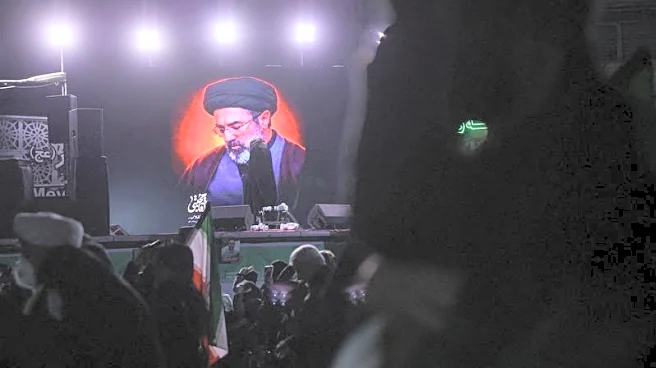
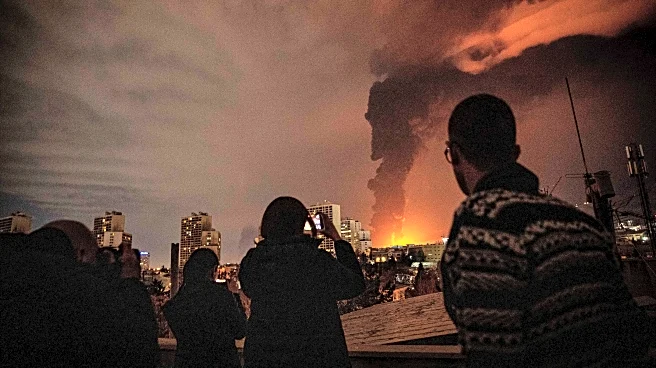
and regional tensions. The situation is further complicated by the recent death of Khamenei's wife, Mansoureh Khojasteh Bagherzadeh, leading to a joint burial plan at the Imam Reza Shrine in Mashhad. Security concerns are heightened by the ongoing regional conflict, with Israeli officials indicating potential threats to any newly appointed Supreme Leader. Foreign dignitaries, particularly those linked to Hezbollah and the Houthis, have expressed apprehension about attending the funeral, citing the recent killing of Hamas leader Ismail Haniyeh in Tehran. The Iranian government is also grappling with the issue of succession, as the Assembly of Experts has not yet decided on Khamenei's successor. This uncertainty is compounded by the need to project unity and legitimacy amid widespread anti-government protests earlier this year.
Why It's Important?
The funeral arrangements for Ayatollah Khamenei are significant as they reflect the broader geopolitical and internal challenges facing Iran. The security concerns and regional tensions underscore the fragile state of affairs in the Middle East, with potential implications for international relations and regional stability. The uncertainty surrounding the succession of the Supreme Leader is critical, as it could influence Iran's future political direction and its interactions with global powers. The Iranian leadership's efforts to stage a large and symbolic funeral are aimed at demonstrating internal unity and strength, which is crucial for maintaining domestic stability and projecting power externally. The situation also highlights the challenges faced by the Iranian government in managing public perception and addressing internal dissent.
What's Next?
The next steps involve finalizing the funeral arrangements and addressing the succession issue. The Iranian government will likely continue to navigate security concerns while attempting to ensure a significant turnout for the funeral to project an image of unity and support. The decision on Khamenei's successor will be closely watched, as it will have implications for Iran's domestic and foreign policy. The international community, particularly regional actors and global powers, will be monitoring the situation closely, as the outcome could affect regional dynamics and international relations. The Iranian leadership may also face increased pressure to address internal dissent and public discontent, which could influence future policy decisions.
Beyond the Headlines
The funeral and succession issues in Iran have deeper implications for the country's political and cultural landscape. The challenges in organizing the funeral reflect the broader societal tensions and the government's struggle to maintain control amid public discontent. The succession of the Supreme Leader is not just a political decision but also a cultural and religious one, as it involves the selection of a figure who embodies the ideological and spiritual leadership of the country. The situation also raises questions about the future of Iran's political system and its ability to adapt to changing domestic and international circumstances. The outcome of these events could lead to long-term shifts in Iran's governance and its role in the region.