






What's Happening?
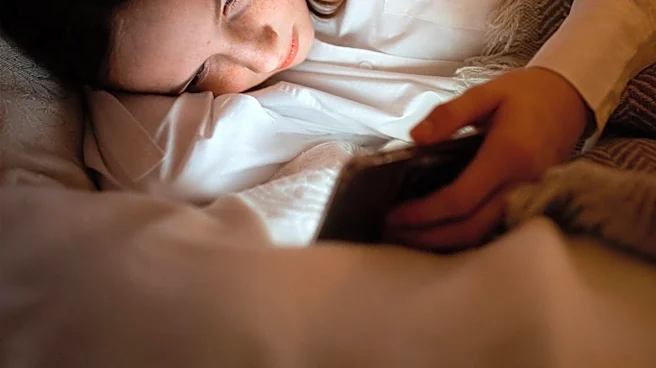
A new study indicates that even minimal light exposure during sleep, such as 3 lux (equivalent to moonlight), can negatively impact heart health. Researchers found that individuals sleeping in rooms with 3 lux or more of light exhibited thicker walls
in the left ventricle, the heart's primary pumping chamber. This condition, known as left ventricular hypertrophy, can impair the heart's ability to effectively fill and pump blood. The study also observed that the hearts of those exposed to more light did not contract or pump as efficiently. These findings suggest a potential link between nighttime light exposure and changes in heart structure and function that elevate the risk of cardiovascular disease. The changes observed are typically associated with chronic stress or injury to the heart, weakening it over time and potentially leading to heart failure. Experts recommend simple solutions like blackout curtains, warm-colored bedside lighting, and covering standby LEDs on electronic devices to mitigate this risk.
Why It's Important?
This research highlights a previously underestimated environmental factor contributing to cardiovascular disease, a leading cause of mortality in the U.S. The ubiquity of artificial light in modern society means a significant portion of the population could be unknowingly increasing their heart disease risk. The study's implications extend beyond individual sleep habits to broader public health concerns, particularly light pollution in urban areas. If confirmed by further research, these findings could prompt a reevaluation of urban lighting policies and personal sleep environments. For individuals, understanding this risk empowers them to take proactive steps to improve their sleep hygiene and protect their heart health. For healthcare providers, it suggests a new line of inquiry when assessing patients with heart conditions, encouraging questions about their sleep environment and light exposure.
What's Next?
The study suggests that clinicians, especially those managing patients with heart failure or atrial fibrillation, should begin inquiring about patients' sleep environments, including bedroom darkness, night shift work, and screen use after sunset. Public health officials may consider the implications for light pollution, as cities have the ability to control and affordably implement solutions like shielded fixtures, warm-spectrum bulbs, and dimming or motion-activated streetlights. Further research is likely to explore the exact mechanisms by which nighttime light affects the heart, potentially leading to more targeted interventions and recommendations. Individuals are encouraged to adopt simple, inexpensive fixes such as using blackout curtains, choosing warm-colored bedside lighting, and covering small standby LEDs on household electronics. Sleep masks are also suggested as an option if complete darkness cannot be achieved.
Beyond the Headlines
The study's findings delve into the intricate relationship between our modern environment and fundamental biological processes. The disruption of the circadian rhythm, the body's natural sleep-wake cycle, by artificial light is a key underlying mechanism proposed by the researchers. This underscores a broader societal challenge: how technological advancements and urban development impact human health in subtle yet profound ways. The concept that even minimal light can have significant physiological consequences highlights the importance of aligning our lifestyles with our evolutionary biology. This research could spark a greater public awareness campaign about the often-overlooked aspects of sleep hygiene beyond just duration, emphasizing the quality of the sleep environment. It also raises ethical considerations for urban planners and lighting designers to prioritize human health in their designs, moving towards more 'dark sky friendly' cities.