



What's Happening?
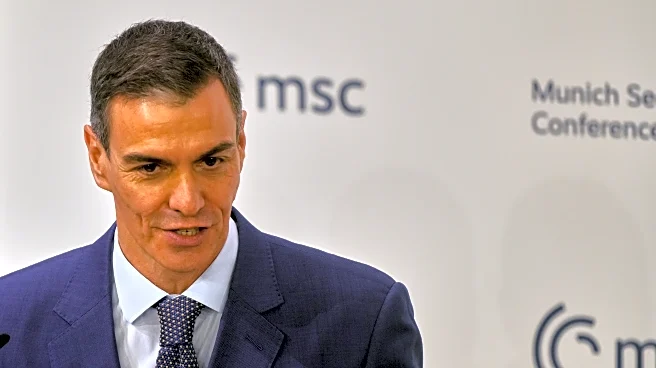
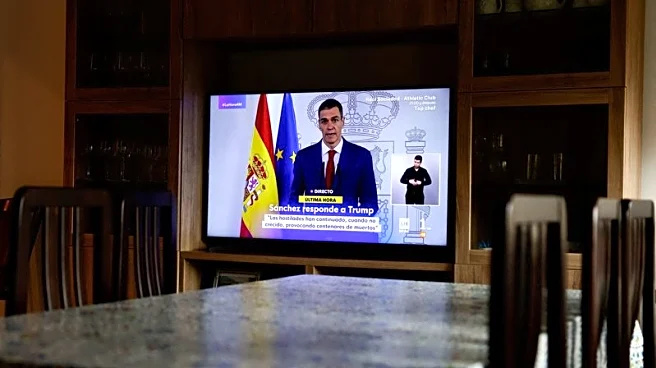
Spanish Prime Minister Pedro Sánchez has openly criticized U.S. President Donald Trump's approach to international relations, particularly regarding the Middle East. In a recent televised address, Sánchez condemned Trump's threats to cut off trade with
Spain due to its refusal to allow U.S. military bases in Andalucía to be used for strikes against Iran. Sánchez emphasized the importance of protecting citizens and avoiding manipulation in global conflicts. His stance marks him as one of the few European leaders to openly challenge Trump's demands, highlighting the potential destabilization and economic consequences of another war in the Middle East.
Why It's Important?
Sánchez's opposition to Trump's policies underscores a significant rift between the U.S. and some European allies. His stance could influence other European leaders to reconsider their positions on U.S. foreign policy, potentially affecting international alliances and trade relations. The Spanish Prime Minister's emphasis on protecting citizens and promoting peace contrasts with Trump's aggressive strategies, which could lead to further diplomatic tensions. This development is crucial as it may impact U.S.-Spain relations and broader European diplomatic dynamics, especially in the context of military cooperation and economic partnerships.
What's Next?
The ongoing diplomatic tension between Spain and the U.S. may lead to further discussions among European leaders about their collective stance on U.S. foreign policy. Sánchez's position could inspire other European countries to voice their concerns, potentially leading to a more unified European response to U.S. actions in the Middle East. Additionally, the situation may prompt further negotiations between Spain and the U.S. to resolve the trade and military base issues, with potential implications for NATO and international security strategies.
Beyond the Headlines
Sánchez's vocal opposition to Trump's policies highlights broader ethical and cultural dimensions, such as the role of European leaders in advocating for peace and stability. His stance reflects a growing sentiment among some European populations against aggressive military interventions and the prioritization of diplomatic solutions. This development may also influence public opinion in Europe, potentially leading to increased support for leaders who prioritize humanitarian values and international cooperation over military aggression.