






What's Happening?
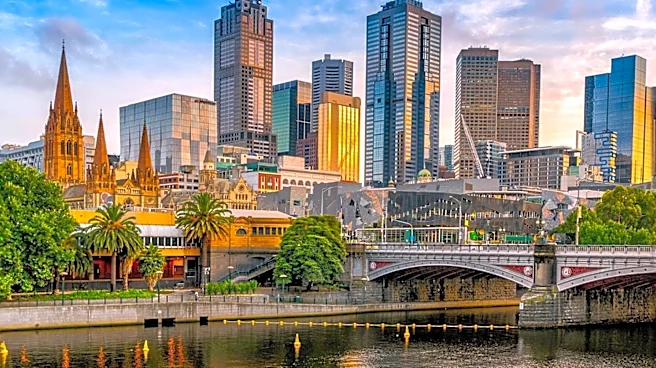
Melbourne, Australia, has established itself as a leading global destination for higher education, drawing over 200,000 international students. The city hosts seven major universities, each offering distinct strengths and academic pathways. The University
of Melbourne, a member of the prestigious Group of Eight, is recognized as Australia's highest-ranked university, excelling in research and offering broad undergraduate degrees followed by specialized graduate programs in fields like medicine, law, and engineering. Monash University, Australia's largest, is globally renowned for pharmacy, engineering, business, and medicine. RMIT University focuses on industry-connected programs in design, architecture, engineering, and technology, emphasizing practical education. Other institutions include Deakin University, known for sport science and flexible study options; Swinburne University of Technology, specializing in innovation and design; La Trobe University, strong in health sciences and biomedicine; and Victoria University, which pioneered the 'Block Model' of studying one subject at a time. These universities collectively contribute to Melbourne's reputation as a vibrant academic hub.
Why It's Important?
The significant influx of international students to Melbourne's universities underscores the global appeal and competitive standing of Australian higher education. This trend has substantial economic and cultural implications for the city and the country. Economically, international students contribute billions of dollars through tuition fees, accommodation, and living expenses, supporting local businesses and creating jobs. Culturally, their presence fosters diversity, enriches the academic environment, and promotes international understanding and collaboration. For the U.S., this highlights the competitive landscape in attracting global talent and the importance of maintaining high-quality, accessible higher education options. The success of Melbourne's universities in drawing such a large international cohort could serve as a benchmark for U.S. institutions looking to enhance their global reach and impact, particularly in specialized fields where Australian universities are gaining prominence. The diverse program offerings also reflect a global demand for specialized skills, influencing curriculum development and research priorities worldwide.
What's Next?
Melbourne's universities are expected to continue refining their offerings and international recruitment strategies to maintain their competitive edge. This includes further developing specialized programs, enhancing industry partnerships to improve graduate employability, and offering flexible study options, including online platforms. Universities will likely focus on providing comprehensive support services and scholarships to attract and retain international students, addressing factors such as tuition costs, accommodation, and visa requirements. The ongoing competition for international students will drive innovation in educational delivery and student experience. For prospective students, the emphasis will remain on matching specific course strengths with career goals, rather than solely relying on overall university rankings. Universities will also need to adapt to evolving global education trends and potential shifts in international student mobility, ensuring their programs remain relevant and attractive in a dynamic global environment.
Beyond the Headlines
The success of Melbourne's universities in attracting a vast international student body points to deeper trends in global education and talent migration. It highlights the increasing importance of specialized subject rankings over general institutional rankings, as students prioritize programs that align directly with their career aspirations. This also underscores the growing demand for practical, industry-connected education that prepares graduates for the global workforce. The 'Block Model' pioneered by Victoria University, for instance, represents an innovative approach to learning that could influence pedagogical methods in other countries. Furthermore, the substantial economic contribution of international students raises questions about the sustainability of such models and the potential for over-reliance on international tuition fees. The ethical implications of recruiting international students, including ensuring their well-being and providing adequate support, will remain a critical consideration for these institutions. The long-term impact on Melbourne's urban development, infrastructure, and social fabric due to this large student population also warrants ongoing attention.