
What's Happening?
On December 21, 2025, Washington D.C. experienced a mild winter solstice, with temperatures reaching a high of 51 degrees Fahrenheit, which is four degrees warmer than the average for this time of year.
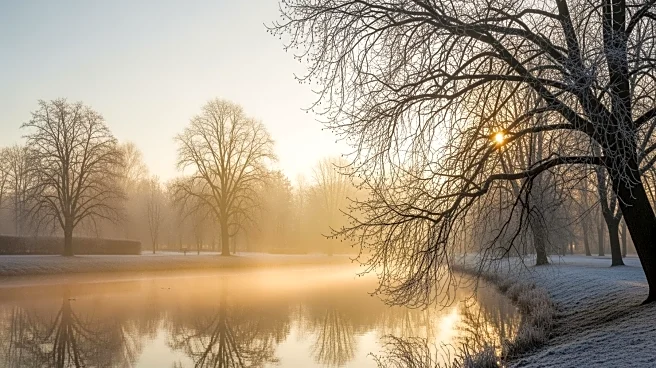
The day was marked by overcast skies with occasional bursts of sunlight, creating a visually striking contrast against the pale gray clouds. The solstice, occurring at 10:03 a.m., signifies the point at which the sun appears to stop its southward descent and begins its journey back north, leading to longer days and shorter nights. This astronomical event marks the official start of winter, despite the relatively warm temperatures experienced in the capital.
Why It's Important?
The winter solstice is a significant astronomical event that marks a turning point in the Earth's seasonal cycle. For residents of Washington D.C., the mild weather accompanying this year's solstice offers a reprieve from the typically colder conditions expected in late December. This warmth may influence local energy consumption patterns, as less heating is required, potentially impacting utility bills and energy resource management. Additionally, the solstice is a cultural and symbolic moment, often associated with themes of renewal and hope, as it heralds the gradual return of longer daylight hours. This can have a positive psychological impact on individuals, offering a sense of optimism as the days begin to lengthen.
What's Next?
As the solstice marks the beginning of winter, Washington D.C. residents can expect colder temperatures in the coming weeks, with January typically being one of the coldest months. The gradual increase in daylight hours will continue until the summer solstice in June, providing more opportunities for outdoor activities and potentially boosting local tourism and recreation industries. Meteorologists and climate scientists will continue to monitor weather patterns to provide accurate forecasts and prepare for any extreme weather events that may occur during the winter season.
Beyond the Headlines
The winter solstice also serves as a reminder of the Earth's complex relationship with the sun and the broader implications of climate patterns. As global discussions on climate change continue, understanding these natural cycles becomes increasingly important for developing sustainable environmental policies. The solstice's symbolism of renewal and change can inspire communities to reflect on their environmental impact and consider adopting more sustainable practices to mitigate climate change effects.