






What's Happening?
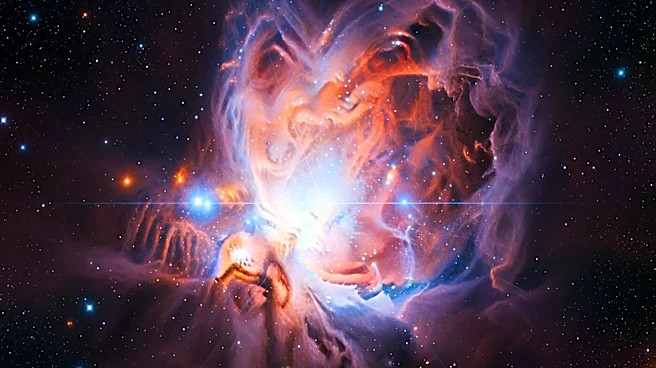
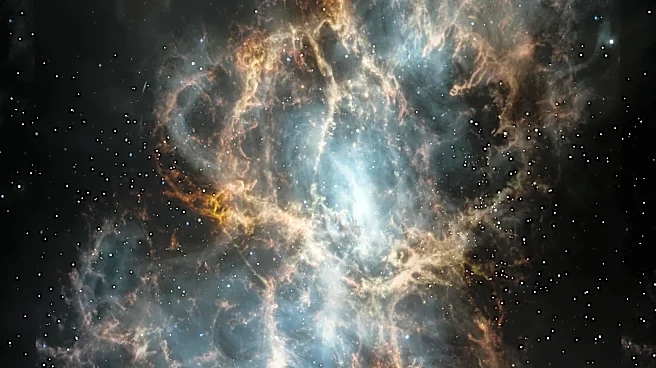
The James Webb Space Telescope (JWST) has captured new imagery of a nebula surrounding a dying star, revealing the presence of mysterious carbon molecules known as 'buckyballs'. These molecules, which resemble soccer balls, were first discovered in space
in 2010. The new images show intricate structures within the nebula, raising new questions about the formation and evolution of these molecules. The JWST's advanced capabilities allow for detailed observations that were not possible with previous telescopes, providing new insights into the processes occurring in dying stars.
Why It's Important?
The discovery of buckyballs in space is significant because these molecules are a type of polycyclic aromatic hydrocarbons, which are considered building blocks of life. Understanding their formation and distribution in space could provide insights into the origins of life and the chemical processes that occur in the universe. The JWST's findings could also enhance our understanding of the life cycle of stars and the chemical evolution of galaxies.