


What's Happening?
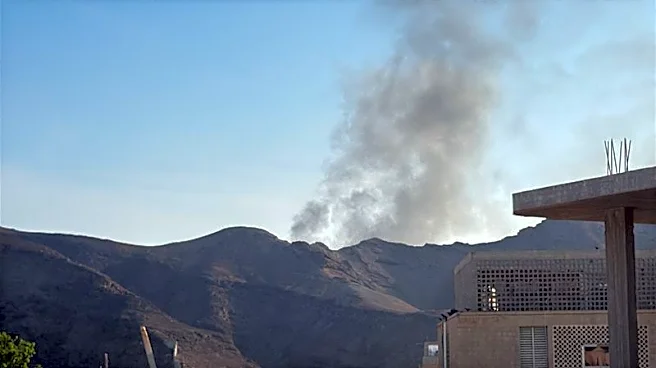
The U.S. Embassy in Saudi Arabia has emphasized the G7 Foreign Ministers' strong condemnation of Iranian aggression in the Strait of Hormuz and ongoing Houthi strikes against Saudi Arabia and Yemen. This condemnation emerged from a recent G7 meeting in Paris,
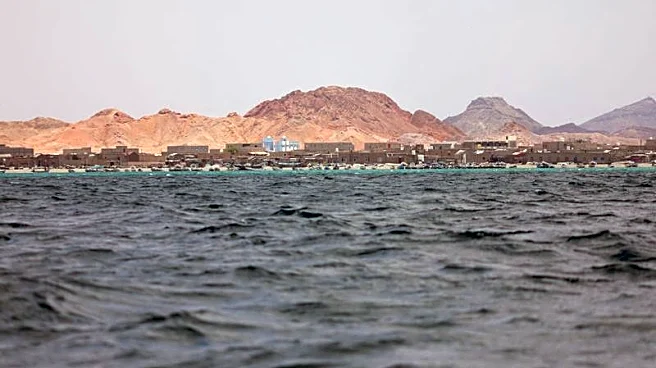
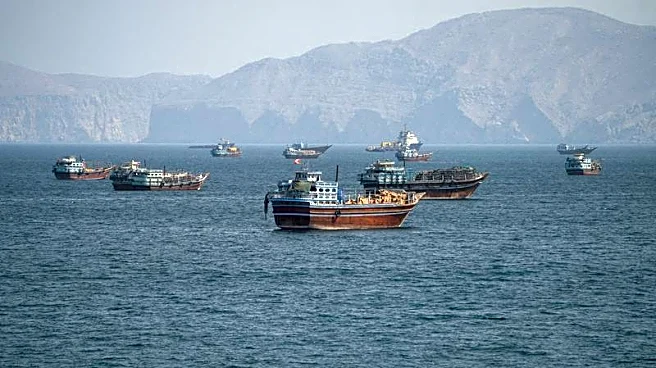
where ministers highlighted threats to Gulf stability and international trade routes. The G7 specifically criticized Iran's attacks against its neighbors and the disruption of global trade, energy security, and the economy caused by obstructions in the Strait of Hormuz. They also condemned Houthi strikes on Saudi Arabia, including those targeting civilians and infrastructure, urging an immediate cessation of military operations to facilitate a political settlement. The G7 reaffirmed the right of Saudi Arabia and Yemen to defend their territories and called on external actors, particularly Iran, to stop supplying arms to the Houthis in violation of UN Security Council resolutions.
Why It's Important?
This G7 statement, amplified by the U.S. Embassy, underscores a unified international stance against actions that destabilize the Middle East and threaten global commerce. The condemnation of Iranian aggression in the Strait of Hormuz is crucial for maintaining the free flow of oil and goods, which directly impacts global energy prices and the U.S. economy. Similarly, Houthi attacks in the Red Sea and against Saudi Arabia pose risks to maritime security and regional stability, potentially disrupting supply chains and increasing shipping costs for U.S. businesses and consumers. The call for Iran to cease arming the Houthis highlights a key point of contention and a significant factor in the ongoing conflict, with implications for U.S. foreign policy and security interests in the region.
What's Next?
The G7's strong condemnation signals continued international pressure on Iran and the Houthis. This could lead to further diplomatic efforts to de-escalate tensions and enforce existing UN Security Council resolutions. The G7 also pledged to tighten punitive economic measures against Russia's war economy, including targeting shadow-fleet vessels and oil traders, and condemned military support provided to Moscow by Iran, North Korea, and China. This broader approach suggests a coordinated effort to address interconnected global security challenges. The emphasis on a political settlement in Yemen and the opening of a humanitarian corridor in Taiz indicates a focus on both security and humanitarian concerns, which will likely remain priorities for international engagement.
Beyond the Headlines
The G7's unified message reflects a growing concern among major global powers about the interconnectedness of regional conflicts and their impact on international stability and economic security. The explicit naming of Iran as a supplier of arms to the Houthis highlights the proxy nature of some conflicts in the Middle East and the challenges of achieving lasting peace. The G7's commitment to enforcing UN sanctions and addressing Iran's nuclear program further demonstrates a comprehensive strategy to counter perceived threats. This coordinated international pressure aims to deter further aggression and promote adherence to international law, shaping the geopolitical landscape and influencing future U.S. foreign policy decisions in the region.