





What's Happening?
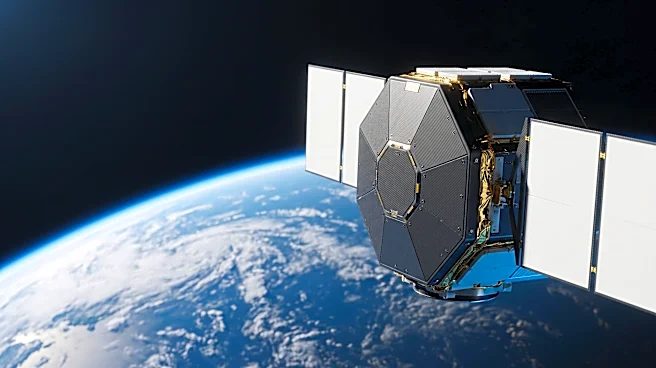
The Information Technology and Innovation Foundation (ITIF) has issued recommendations for policymakers regarding the development of orbital data centers. As these technologies advance, ITIF suggests focusing on reducing regulatory uncertainty, improving
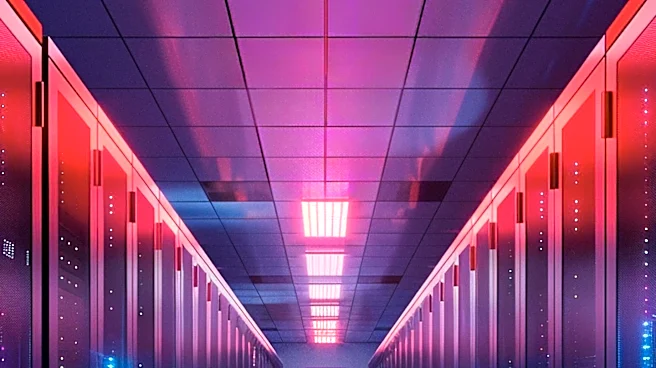
the predictability of spectrum access and licensing, clarifying cybersecurity expectations, and enhancing the safety of the increasingly congested orbital environment. These measures are intended to lower barriers to experimentation while maintaining safeguards for competition, national security, orbital sustainability, and the reliable operation of critical communications infrastructure. Orbital data centers, specialized satellites that perform computing functions in space, are gaining attention due to rising demand for computing capacity and advancements in commercial space capabilities. While not a near-term replacement for terrestrial cloud infrastructure, they are seen as a complementary layer for specific workloads, particularly those benefiting from in-space data processing like Earth observation and spacecraft autonomy. The report emphasizes that the success of orbital data centers should depend on technical performance, economics, and customer demand, rather than regulatory hurdles.
Why It's Important?
The policy considerations for orbital data centers are crucial for the U.S. technology and space industries. Clear and predictable regulatory frameworks are essential to foster innovation and investment in this nascent field. Without streamlined licensing and spectrum access, U.S. companies developing orbital computing solutions could face significant delays and increased costs, potentially hindering their global competitiveness. Clarifying cybersecurity expectations is also vital, given the unique vulnerabilities of space-based systems to radiation, thermal challenges, and limited physical access for repairs. Ensuring orbital sustainability through debris mitigation and space traffic coordination is paramount to protect existing space assets and prevent a future where orbital environments become unusable. The development of orbital data centers could offer strategic advantages for national security and critical infrastructure by enabling faster data processing for defense and intelligence applications, and by reducing reliance on terrestrial infrastructure for certain specialized tasks. The recommendations aim to create an environment where the U.S. can lead in this emerging technological frontier.
What's Next?
Policymakers are urged to implement reforms that minimize regulatory friction to allow for effective testing and deployment of orbital data centers. This includes addressing constraints on spectrum access, streamlining inefficient licensing processes, and evaluating launch capacity needs. The FCC is already considering measures to clarify spectrum access and make additional spectrum available for space operations. Congress could further support these efforts through legislation aimed at increasing the predictability of satellite licensing. Additionally, agencies like NOAA's Office of Space Commerce are working on systems to improve space situational awareness and safety. Regulatory bodies will need to proactively determine how existing compliance regimes apply to hybrid space-and-ground network architectures or develop new regulations for next-generation systems. The goal is to enable experimentation and allow market forces to determine the genuine value of orbital computing, ensuring that regulatory frameworks support innovation while safeguarding national interests and orbital sustainability.
Beyond the Headlines
The emergence of orbital data centers presents deeper implications beyond immediate policy and economic considerations. Ethically, the increasing congestion of Earth's orbit raises concerns about equitable access to space and the long-term environmental impact of space debris. The cybersecurity challenges are not merely technical but also involve questions of international cooperation and the potential for state-sponsored attacks on critical space infrastructure, which could have cascading effects on terrestrial systems. Culturally, the concept of computing in space pushes the boundaries of human endeavor and our relationship with technology, potentially leading to new paradigms for data processing and storage. The long-term shift could see a redefinition of digital infrastructure, with a significant portion of data processing moving off-planet, impacting everything from global communication networks to scientific research. This development also highlights the growing convergence of space exploration, telecommunications, and computing, creating a complex interdisciplinary field that demands integrated policy and ethical considerations.