




What's Happening?
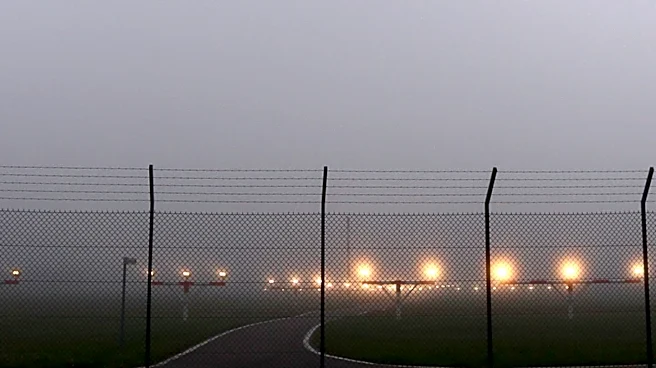
A KLM flight originating from Amsterdam, scheduled to land at Norwich Airport, was forced to divert and land at Stansted Airport, located over 80 miles away. The diversion occurred as Norwich remained enveloped in fog, which had also led to the cancellation
of several other flights earlier in the day. The KLM plane, which was expected to arrive at 5:40 PM, conducted multiple loops over Norwich before heading south towards Stansted. While the specific reasons for the diversion were not explicitly stated, the presence of a yellow weather warning for fog at Norwich Airport strongly suggests weather conditions were the primary factor. This incident highlights the significant impact adverse weather can have on air travel schedules and operations, necessitating diversions to alternative airports to ensure passenger safety.
Why It's Important?
This incident underscores the critical role of weather conditions in air travel safety and operational efficiency. For passengers, diversions like this can lead to significant delays, inconvenience, and additional travel costs as they arrange alternative transportation from the diverted airport to their original destination. For airlines, such events result in increased operational expenses, including fuel costs for extended flights, landing fees at alternative airports, and potential compensation for affected passengers. Airports, particularly smaller regional ones like Norwich, face disruptions to their schedules and potential financial losses from cancelled or diverted flights. The reliance on precise weather forecasting and the implementation of robust contingency plans are crucial for minimizing the impact of such events on both travelers and the aviation industry.
What's Next?
Passengers affected by the diversion will likely need to arrange ground transportation from Stansted Airport to Norwich, or to their final destinations. KLM will be responsible for assisting passengers with these arrangements, though the extent of this assistance can vary based on the airline's policies and the specific circumstances of the diversion. Norwich Airport will continue to monitor weather conditions closely, and flight operations will resume as soon as the fog clears and it is deemed safe for aircraft to land and depart. The incident may prompt a review of weather-related contingency plans for both the airline and the airport to enhance preparedness for similar future events, aiming to minimize disruptions for travelers.
Beyond the Headlines
The diversion of the KLM flight due to fog highlights a broader challenge faced by the aviation industry: the increasing unpredictability of weather patterns, potentially exacerbated by climate change. While fog is a common meteorological phenomenon, its impact on air travel can be substantial, leading to cascading delays across the air traffic network. This event also brings to light the interconnectedness of regional and major international airports; a weather issue at a smaller airport can necessitate the use of larger hubs as diversion points, placing additional strain on their resources. The incident serves as a reminder of the complex logistical challenges involved in air travel and the continuous need for advanced meteorological forecasting and flexible operational strategies to ensure safety and efficiency.