
What's Happening?
Israeli farms are increasingly relying on robotic pollination technology due to labor shortages and restricted field access caused by regional conflict. The agricultural sector, particularly in areas near
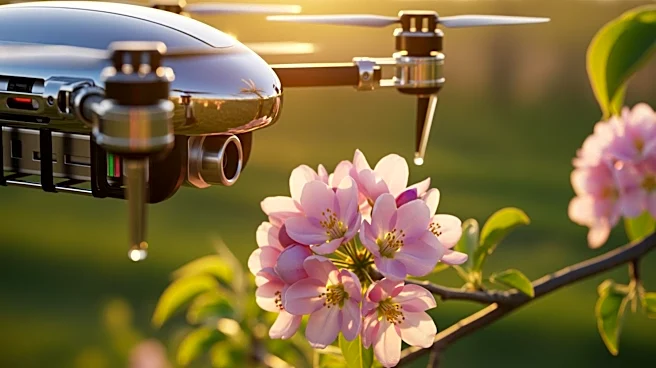
the Gaza border, is facing significant challenges during the critical spring bloom period. Farmers are using BloomX's AI-guided pollination tools to ensure fruit set and stabilize yields. This technology, which mimics natural pollination processes, has become essential as traditional methods are disrupted by the ongoing conflict. The robotic systems analyze flowering patterns and weather conditions to optimize pollination timing, helping farmers maintain productivity despite the challenging circumstances.
Why It's Important?
The adoption of robotic pollination technology is crucial for Israeli farmers facing labor shortages and operational disruptions due to regional tensions. This shift not only helps secure the current harvest but also ensures the stability of future food supplies. The technology's ability to enhance fruit set and quality by up to 20% provides a significant economic advantage, especially in times of conflict. As traditional pollination methods are compromised, the use of AI-driven tools becomes a strategic necessity, transforming what was once a competitive edge into a vital component of agricultural resilience.
What's Next?
As the conflict continues, the reliance on robotic pollination technology is likely to increase. Farmers may further integrate AI-driven solutions to mitigate the impact of labor shortages and restricted field access. The success of these technologies in maintaining yields could encourage broader adoption across the agricultural sector, potentially leading to innovations in other areas of farming. Additionally, the ongoing situation may prompt further investment in agricultural technology to enhance resilience against future disruptions.
Beyond the Headlines
The use of robotic pollination technology highlights a broader trend towards automation in agriculture, driven by both necessity and opportunity. This shift raises questions about the future role of traditional farming practices and the potential for technology to reshape the industry. Ethical considerations regarding the replacement of human labor with machines may also emerge, alongside discussions about the environmental impact of increased technological reliance in farming.