




What's Happening?
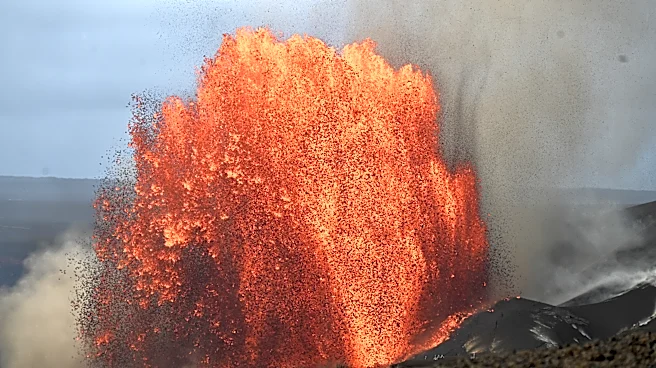
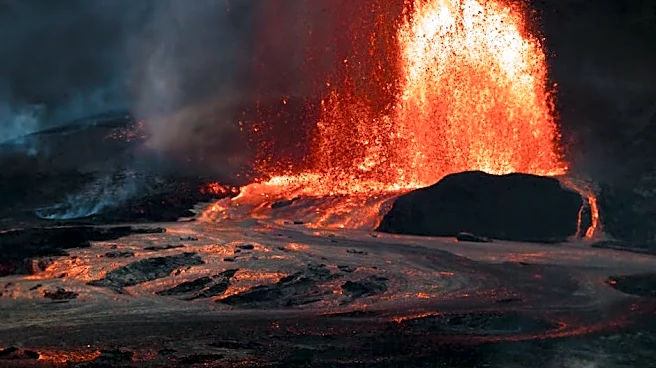
Hawaii's Kilauea volcano has set a new record for the number of lava fountaining episodes during its ongoing eruption, which began in December 2024. As of Monday, the volcano has experienced 48 such episodes, surpassing the previous record of 47 episodes that
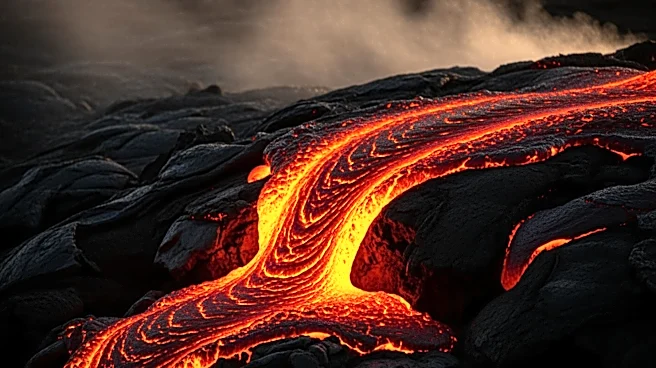
occurred during an eruption in the 1980s. The Hawaiian Volcano Observatory reports that these episodes are characterized by periods of intense lava fountaining, separated by intervals of little to no activity. The current eruption is notable for its accessibility to both residents and tourists, unlike the more remote eruption of the 1980s. The ongoing volcanic activity is reshaping the summit's topography and poses potential risks to nearby communities due to volcanic fragments and ash, known as tephra.
Why It's Important?
The record-breaking activity of Kilauea has significant implications for both the local environment and the communities on Hawaii's Big Island. The continuous reshaping of the summit's topography could alter local ecosystems and landscapes. Additionally, the volcanic ash and fragments pose health and safety risks to nearby residents and could impact air quality. The eruption's accessibility has also turned it into a tourist attraction, potentially boosting local tourism but also increasing the risk of exposure to volcanic hazards. Understanding the patterns and impacts of such eruptions is crucial for disaster preparedness and mitigation strategies in volcanic regions.
What's Next?
The Hawaiian Volcano Observatory will continue to monitor Kilauea's activity closely. Future episodes of lava fountaining are expected, and the observatory will provide updates to ensure public safety. Local authorities may need to implement additional safety measures to protect residents and tourists from volcanic hazards. The ongoing eruption could also prompt further research into volcanic activity and its effects on the environment and human health. As the eruption continues, it will be important for local communities to stay informed and prepared for any changes in volcanic activity.