
What's Happening?
U.S. Central Command (CENTCOM) recently held a summit in Doha with representatives from approximately 45 countries to discuss the formation of an International Stabilization Force (ISF) to oversee the ceasefire
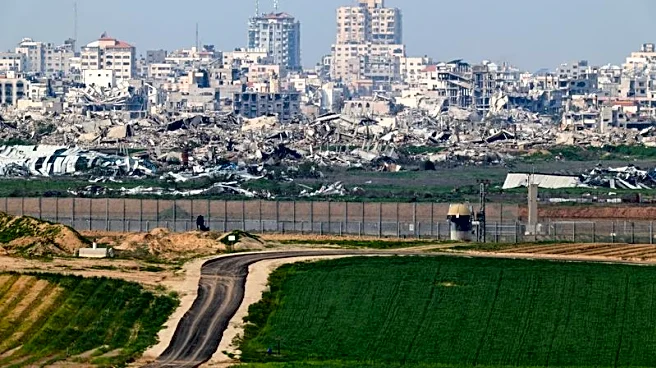
in Gaza. Notably, Israel was not present at this closed-door meeting. The U.S. presented initial plans for the force, seeking commitments from participating nations in terms of troops, funding, or training. The summit also addressed the stalled second phase of the ceasefire deal between Israel and Hamas, which has been delayed following the targeted killing of a senior Hamas commander. The U.S. aims to finalize the ISF's structure, including its mandate and rules of engagement, by January, despite concerns about potential clashes with terrorists.
Why It's Important?
The creation of an International Stabilization Force in Gaza is significant as it represents a major international effort to maintain peace in a volatile region. The exclusion of Israel from the talks could have diplomatic repercussions, potentially affecting U.S.-Israel relations. The involvement of multiple countries in the ISF highlights the global interest in stabilizing Gaza, which could lead to increased international cooperation or tension, depending on the force's implementation and effectiveness. The delay in the ceasefire's second phase underscores the fragility of peace efforts in the region.
What's Next?
The U.S. plans to hold another meeting in January to further discuss the ISF's deployment. The force is expected to begin taking shape soon, with training likely to occur in a third country before deployment. The U.S. hopes to appoint an American general as the ISF commander. The ongoing discussions and eventual deployment of the ISF will be closely watched by international stakeholders, as its success or failure could influence future peacekeeping efforts in the Middle East.