





What's Happening?
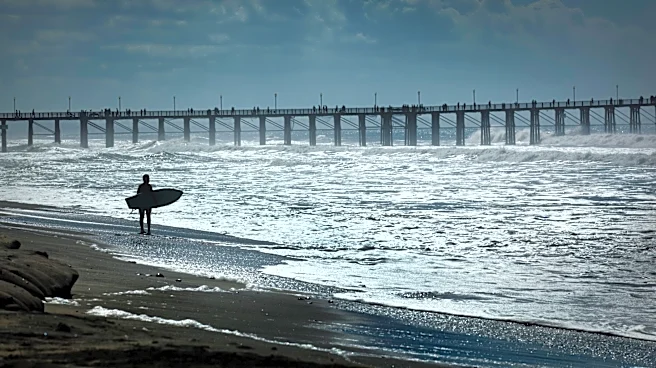
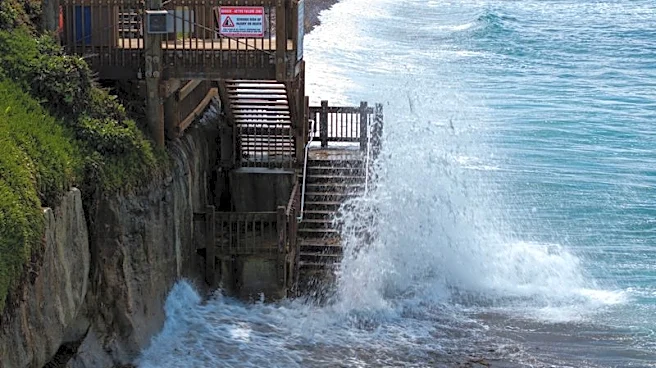
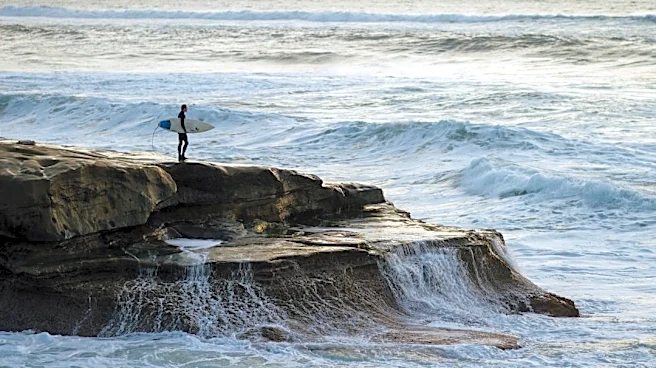
The Southern California beach town of San Clemente is experiencing significant coastal erosion due to sea level rise, which is reshaping its shoreline and threatening a crucial passenger rail line. Residents have noted the loss of walkable beaches, with
the rising sea and crashing waves pushing the shoreline landward and splitting the city's North Beach. Crumbling seaside bluffs have damaged oceanfront homes and led to repeated closures of the rail line, which is the second busiest in the country. This situation is part of a broader trend affecting many California coastal communities, with scientists forecasting that over half of Southern California’s beaches could significantly erode by 2100. Urban development has also contributed by slowing the flow of sediment that once nourished the beaches.
Why It's Important?
The erosion in San Clemente highlights the severe and immediate impacts of sea level rise on coastal communities and critical infrastructure in the United States. The threat to the passenger rail line, which connects San Diego with Los Angeles County's port complex and San Luis Obispo, has significant economic and logistical implications, affecting both passenger and freight transportation, including military use. The repeated closures and the potential need to relocate the tracks underscore the immense costs associated with climate change adaptation. Furthermore, the loss of beaches impacts local tourism, property values, and the quality of life for residents, prompting discussions about local tax measures to fund restoration efforts. This situation serves as a stark example of the challenges faced by coastal regions nationwide in mitigating the effects of a changing climate.
What's Next?
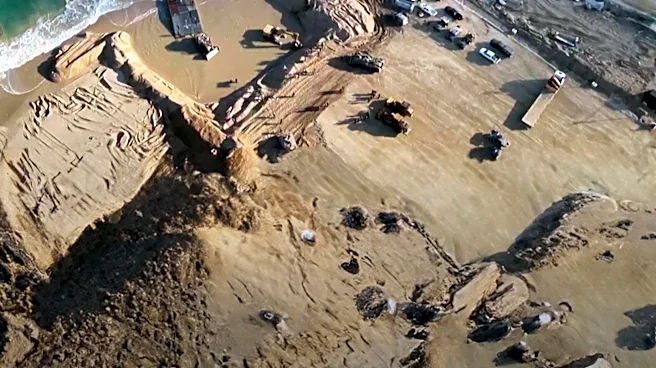
San Clemente is actively seeking solutions to combat coastal erosion. A measure to add a 1% sales tax to fund wildfire protection and sand replenishment is on the November ballot, indicating a local effort to address the issue. Transportation officials have shored up tracks with rock, but this is seen as a temporary measure, as waves continue to sweep sand offshore. Officials are studying the long-term options, including moving the rail line inland, though this has previously been deemed too costly. The recent emergency declaration by California ahead of an expected super El Niño might expedite state permits for sand replenishment. The debate between immediate fixes and long-term, potentially more expensive, relocation strategies will continue as the community grapples with the ongoing environmental changes.
Beyond the Headlines
The struggle in San Clemente extends beyond immediate environmental and infrastructural concerns, touching upon deeper societal and economic questions. The phrase 'fighting Mother Nature is very expensive' encapsulates the dilemma faced by many coastal communities. This situation forces a re-evaluation of the economic viability of maintaining coastal developments in the face of inevitable sea level rise. It also brings to light the complex interplay between urban development, natural coastal processes, and climate change, where human interventions have inadvertently exacerbated natural erosion. The long-term implications could include significant population shifts from vulnerable coastal areas, a redefinition of property rights and insurance liabilities in high-risk zones, and a national conversation about managed retreat as a necessary, albeit difficult, adaptation strategy for communities facing existential threats from rising oceans.