







What's Happening?
Congressman Eric Burlison, a Republican from Missouri, is advocating for the continued development of data centers in the United States, emphasizing their importance for competing with China. This stance comes amidst a growing backlash from the public and
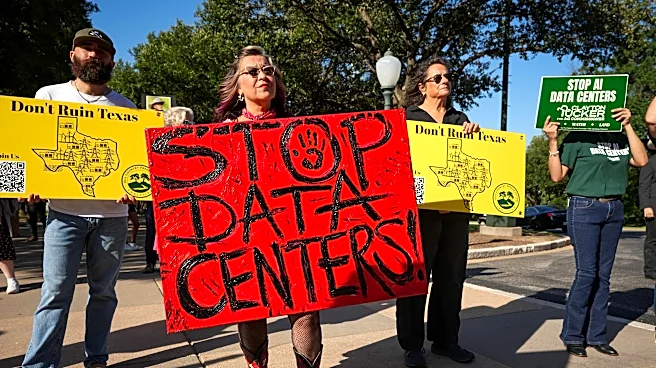
a shift in political rhetoric, with many politicians, including some Republicans and Democrats, now expressing concerns about the downsides of data centers. These concerns include rising power bills, significant water usage, air pollution, eminent domain issues, and the need for taxes and subsidies. While many elected officials are now focusing on mitigating the negative impacts of data centers, Burlison maintains that building these facilities is crucial for national competitiveness. He has publicly stated, "Ask yourself who benefits when Americans turn against data centers? China does," highlighting the strategic imperative of data center expansion despite local opposition.
Why It's Important?
This issue is important because it highlights a significant tension between national strategic interests and local community concerns regarding technological infrastructure. The push for data center development, driven by the need for advanced computing capabilities to compete with global rivals like China, directly conflicts with the immediate environmental and economic impacts felt by local communities. The debate reveals a complex political landscape where politicians are increasingly responsive to grassroots anger over issues like power consumption and resource allocation. For the U.S. technology sector, the ability to build and expand data centers is critical for maintaining innovation and leadership in areas like artificial intelligence. However, for residents in areas targeted for data center construction, the perceived downsides—such as increased utility costs and environmental strain—are becoming a major political issue. This dynamic could influence future policy decisions on infrastructure development, energy regulation, and the balance between national security and local autonomy.
What's Next?
The ongoing public backlash and shifting political sentiment around data centers suggest that future development will likely face increased scrutiny and potential regulatory hurdles. Politicians, including Congressman Burlison, will need to address community concerns more directly, possibly through legislation that mandates environmental safeguards, fair compensation for resource use, or more transparent subsidy structures. The debate is expected to continue influencing midterm elections, as candidates adapt their stances to align with constituent demands. Technology companies and data center developers may need to adopt more community-friendly approaches, focusing on sustainable practices and clearer communication about local benefits. The long-term trajectory could involve a more decentralized approach to data center placement, or the development of new technologies that reduce their environmental footprint, to reconcile the national imperative with local well-being.
Beyond the Headlines
Beyond the immediate political and economic implications, the debate over data centers touches on deeper questions about the societal impact of rapid technological advancement. The public's anxiety about data centers, particularly their resource consumption and potential to drive up costs, can be seen as a tangible manifestation of broader concerns about the future of AI and its integration into daily life. This issue highlights a growing disconnect between the abstract benefits of technological progress, such as national competitiveness, and the concrete, often negative, impacts on local communities. It also underscores a shift in political discourse, where grassroots movements are increasingly influencing policy at higher levels. The challenge lies in finding a balance that allows for technological advancement necessary for global competition while ensuring equitable distribution of benefits and mitigation of adverse effects for all citizens. This could lead to a re-evaluation of how large-scale infrastructure projects are planned, funded, and integrated into communities, emphasizing transparency and local engagement.