
What's Happening?
Raleigh-Durham International Airport (RDU) is set to close its ParkRDU Economy 4 parking lot to travelers starting January 2, 2026. This lot, located near Interstate 540 and U.S. Highway 70, will be repurposed
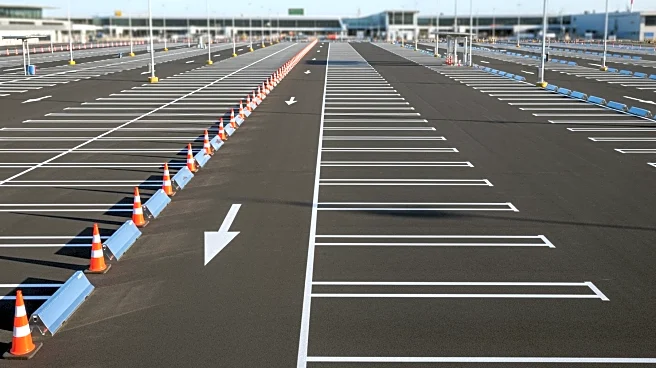
as an employee-only parking area. Travelers will still have access to other parking options, including Economy 3, Express, Central, and Premier lots. The Economy 3 lot is undergoing a significant expansion to accommodate the changes, adding 7,000 new spaces, a customer amenity building, solar panels, and EV chargers. This expansion is part of a $164 million project, with new spaces opening in phases throughout 2026. The changes are part of a broader $2.5 billion capital improvement program at RDU, known as 'Transform RDU,' which includes a new runway, expanded Terminal 2, and enhanced security and baggage claim facilities, expected to be completed by 2032.
Why It's Important?
The closure of the Economy 4 lot and the expansion of Economy 3 are significant for travelers using RDU, as they reflect the airport's efforts to modernize and improve its infrastructure. The addition of 7,000 parking spaces and amenities like solar panels and EV chargers aligns with broader trends in sustainable development and customer convenience. This move is part of a larger capital improvement initiative aimed at accommodating increasing passenger traffic and enhancing the airport's capacity to handle international arrivals. The changes could impact travelers' parking choices and potentially influence traffic patterns around the airport. Additionally, the investment in infrastructure is likely to have economic implications for the region, potentially boosting local employment and business opportunities related to the airport's expansion.
What's Next?
As the expansion of the Economy 3 lot progresses, travelers can expect phased openings of new parking spaces throughout 2026. The broader 'Transform RDU' program will continue to unfold, with major construction projects like the new runway and expanded terminal facilities scheduled for completion by 2032. Stakeholders, including local businesses and government entities, may respond to these developments by adjusting their operations and strategies to align with the airport's growth. Travelers will need to stay informed about parking availability and potential changes in traffic patterns as construction progresses. The airport's focus on sustainability and modernization may also influence future policy decisions and infrastructure investments in the region.