




What's Happening?
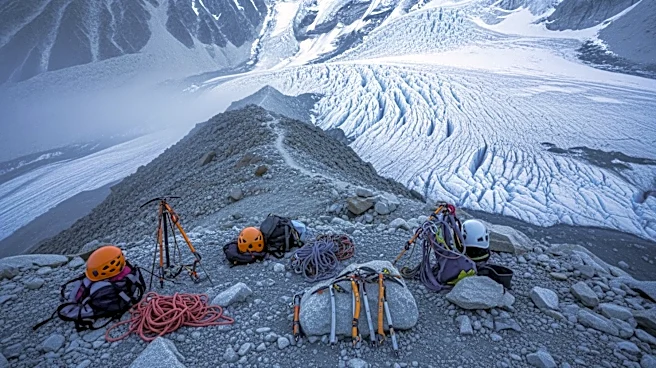
Hundreds of climbers and sherpas are currently stationed at Everest Base Camp, waiting for a massive serac to collapse and clear the route to the summit. The serac, a block of glacial ice, is obstructing the path in the Khumbu Icefall, one of the most
dangerous sections of the climb. Icefall doctors, specialized high-altitude workers, are using advanced technology to assess the situation and ensure safety. Climbers, including Bianca Adler, who aims to be the youngest Australian to summit Everest, are engaging in training activities while waiting for the route to open. Concerns are rising about potential overcrowding once the path is cleared.
Why It's Important?
The blockage at Everest highlights the challenges climbers face due to natural obstacles and the impact of climate change on mountaineering. The situation underscores the importance of safety measures and the expertise of icefall doctors in ensuring climbers' safety. The potential for overcrowding once the route opens raises concerns about the management of climbing expeditions and the need for strategic planning to avoid traffic jams. This event also reflects broader environmental issues, as climate change increases the risks associated with glacial movements, affecting the safety and accessibility of popular climbing destinations.