




What's Happening?
The Punjab government has instructed all public schools to implement the Pre-Smog Action Plan 2026 to protect students from hazardous air pollution during the smog season. The School Education Department issued directives for schools to limit outdoor
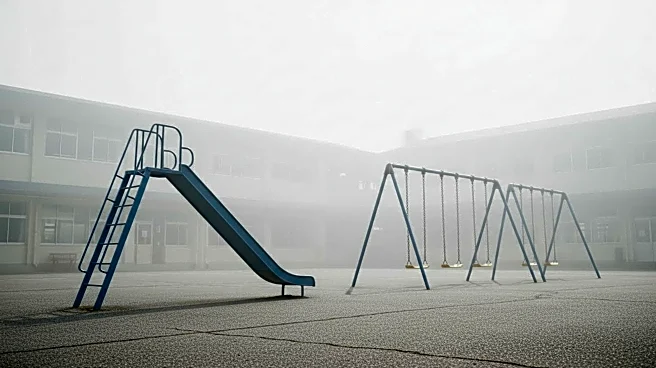
activities and to check the Air Quality Index (AQI) before allowing outdoor workouts or exercises. Students are advised to wear face masks during school hours, and schools are to restrict outdoor play during periods of poor air quality. Additionally, students and school administrations are instructed to avoid unnecessary outdoor exposure or visits to areas with unhealthy AQI levels. Schools are also required to keep doors and windows closed to reduce the intake of polluted air. These measures are part of a broader effort to prevent and mitigate smog, with education authorities tasked with ensuring strict implementation across all schools. Separately, committees have been formed at various administrative levels to organize sports activities, with calendars to be synchronized for seamless competitions.
Why It's Important?
The Punjab government's directive to limit outdoor activities in schools due to smog is a critical public health measure, directly impacting the well-being and education of thousands of students. Smog, a severe form of air pollution, poses significant health risks, particularly to children, including respiratory issues, reduced lung function, and other long-term health problems. By implementing the Pre-Smog Action Plan, the government aims to mitigate these health impacts and ensure a safer learning environment. This initiative also raises public awareness about air quality issues and the importance of environmental protection. For the education sector, it necessitates adjustments to daily routines and curriculum, potentially affecting physical education and extracurricular activities. The broader implication is a recognition of climate and environmental challenges as direct threats to public health and education, requiring proactive governmental responses and inter-departmental coordination.
What's Next?
All public schools in Punjab are now required to strictly implement the Pre-Smog Action Plan 2026, which includes limiting outdoor activities, monitoring AQI levels, ensuring students wear face masks, and keeping school buildings sealed during periods of poor air quality. Education authorities at tehsil, district, divisional, and provincial levels are responsible for ensuring the strict implementation of these measures. Concurrently, newly constituted committees will issue synchronized sports activity calendars starting at the end of next month, aiming to promote sports while adhering to smog-related precautions. These calendars will ensure seamless competitions across different tiers, with all boys' and girls' schools directed to participate. The ongoing monitoring of air quality and the effectiveness of these measures will be crucial in determining future adjustments to the action plan and public health advisories.
Beyond the Headlines
The Punjab government's response to smog in schools highlights a growing global concern about environmental degradation and its direct impact on public health and education. Beyond the immediate health risks, prolonged exposure to poor air quality can have long-term developmental consequences for children, affecting their cognitive abilities and overall quality of life. This situation underscores the need for comprehensive environmental policies that address the root causes of air pollution, such as industrial emissions, vehicular exhaust, and agricultural burning. The directive also brings to light the ethical responsibility of governments to protect vulnerable populations, particularly children, from environmental hazards. Culturally, it may lead to a greater societal awareness and demand for cleaner air, potentially influencing lifestyle choices and urban planning. The long-term shift could involve integrating environmental education into the curriculum and fostering a generation more attuned to climate and environmental challenges.