



What's Happening?
Justice Ketanji Brown Jackson expressed concerns during Supreme Court oral arguments about a legal theory supported by the Republican National Committee that could have wide-ranging effects on election laws. The case involves a Mississippi law allowing
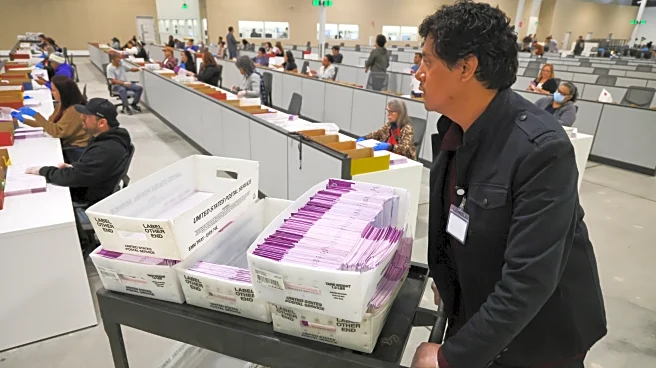
mail-in ballots to be counted if received within five days post-Election Day, provided they are postmarked by then. Jackson highlighted the historical variability in election practices, questioning the consistency of tying federal Election Day definitions to state practices. The court's conservative majority appeared skeptical of the law, which could impact similar statutes in 13 other states and D.C.
Why It's Important?
The case underscores the ongoing debate over mail-in voting, a critical issue in U.S. elections. A ruling against Mississippi could invalidate similar laws, affecting millions of voters and potentially altering election outcomes. The decision could also influence public trust in the electoral process, with concerns about fraud and election integrity at the forefront. The case highlights the tension between state autonomy in election administration and federal oversight, with potential implications for future electoral reforms and voter access.
What's Next?
The Supreme Court is expected to issue a ruling by late June, which will have significant implications for the upcoming midterm elections. States with similar laws may need to revise their election procedures, potentially leading to legislative and legal challenges. The ruling could also prompt federal legislative efforts to standardize mail-in voting rules, though such initiatives may face partisan resistance. Political leaders and advocacy groups are likely to respond, with Democrats pushing for expanded voting access and Republicans emphasizing election security.